The views and opinions expressed on this website are the author's alone. They are not endorsed by the author's employer, nor do they reflect the views and opinions of said employer or any other affiliated entity.
Seven years later, Portal 2's campaign still holds up fairly well.
It did surprise me that it took so long before I got to Cave Johnson. And that the Cave Johnson parts were over so quickly. In my memory, this - wandering through the abandoned archives of Aperture - was the bulk of the game.
But in replaying it, the archives were actually a pretty minor segment, compared to all the stuff before (routine Portaling) and after (Wheatley's insane shit's-on-fire puzzles). That other stuff is still fun, both in puzzle design and in humorous writing and voice acting; Cave Johnson is just so much of a show-stealer, that the rest of the game isn't as memorable.
Compared to the thrilling action-adventure jaunts of today, Portal 2 is a little on the short side (5-6 hours), and takes a little while to warm up. But it's still perfectly enjoyable and worthwhile.
Better than: Portal Not as good as: The Witness's first-person puzzles, and Borderlands 2's humor, both somewhat debatably. Last time, I wrote: "I look forward to even more from the Portal franchise." I still do, I guess, though we may not live to see it.
I don't know if I'm getting this title right. Steam calls it "Picross Fairytale - nonogram: Red Riding Hood Secret" which sounds like a poor translation from ... something. And that fits with the general production value of the game.
That is, like it was ported from a mobile game, and not very well.
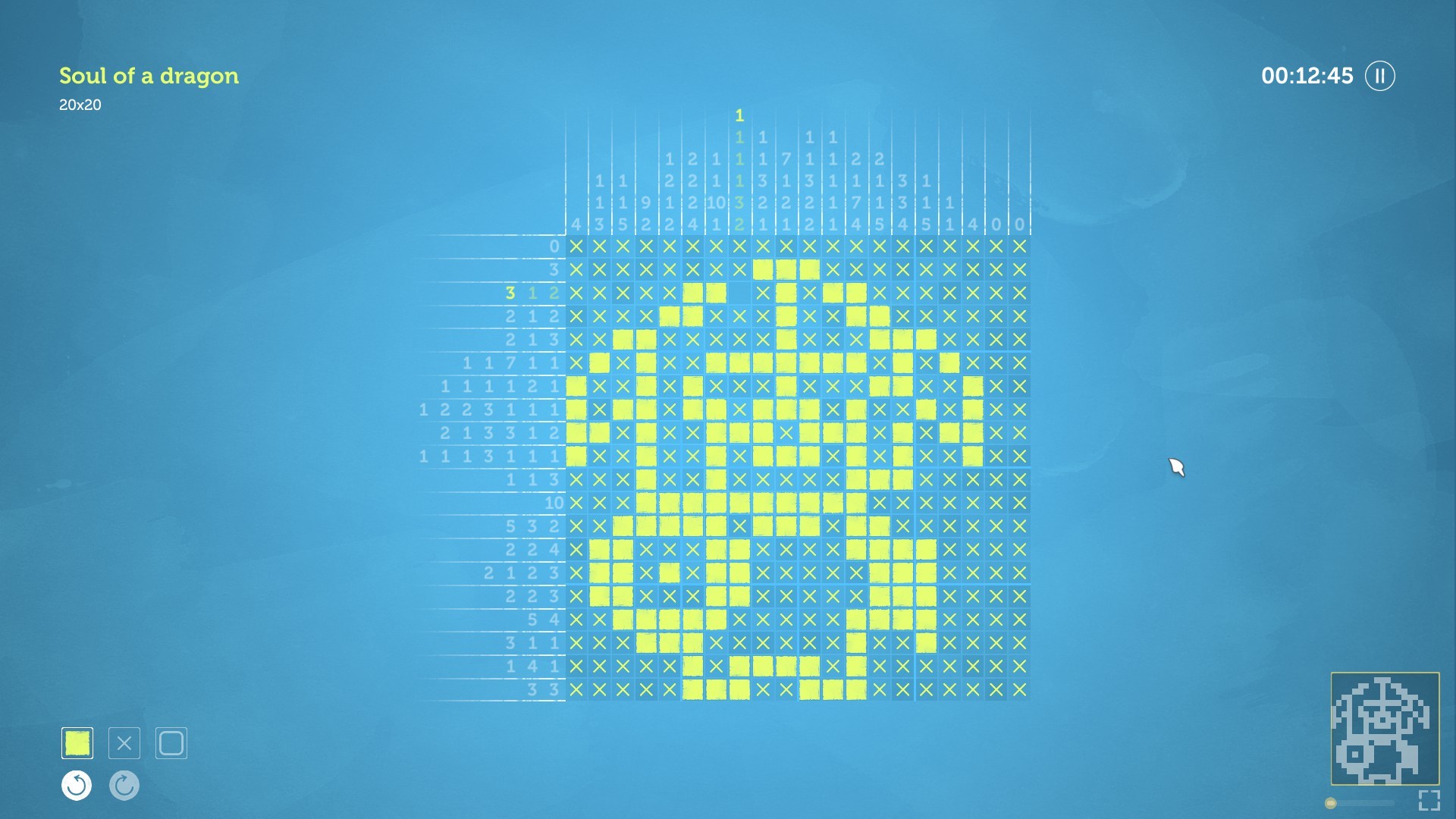
This is the only picross game I've played, so far, in which dragging the cursor over an already-filled square can overwrite that square. Resulting in already-checked or already-crossed squares becoming easily mislabeled. Considering picross games have been fairly widespread for some decades now, this feels like a rookie mistake.
And otherwise, the game has nothing special going for it. The plot is threadbare, a minimalist reference to stories of princes and princesses; the level progression is straightforward and inflexible, pushing you from one level to the next with no surprises; and the interface is about as dumb as possible, with no graying-out of numeric hints when they're satisfied. There is an awkward indicator when a row or column is "right," but since it doesn't take any other rows or columns into account, it's about as helpful as looking at the squares yourself would be.
And you can pay real money for some kind of currency. I don't know what it does. I can't imagine why, in a puzzle game, paying money to ... skip puzzles, I guess? ... would be even remotely okay.
Even considering that it's free, this isn't worth it. You'd do better to shell out a few bucks for a picross game that isn't as outright shitty.
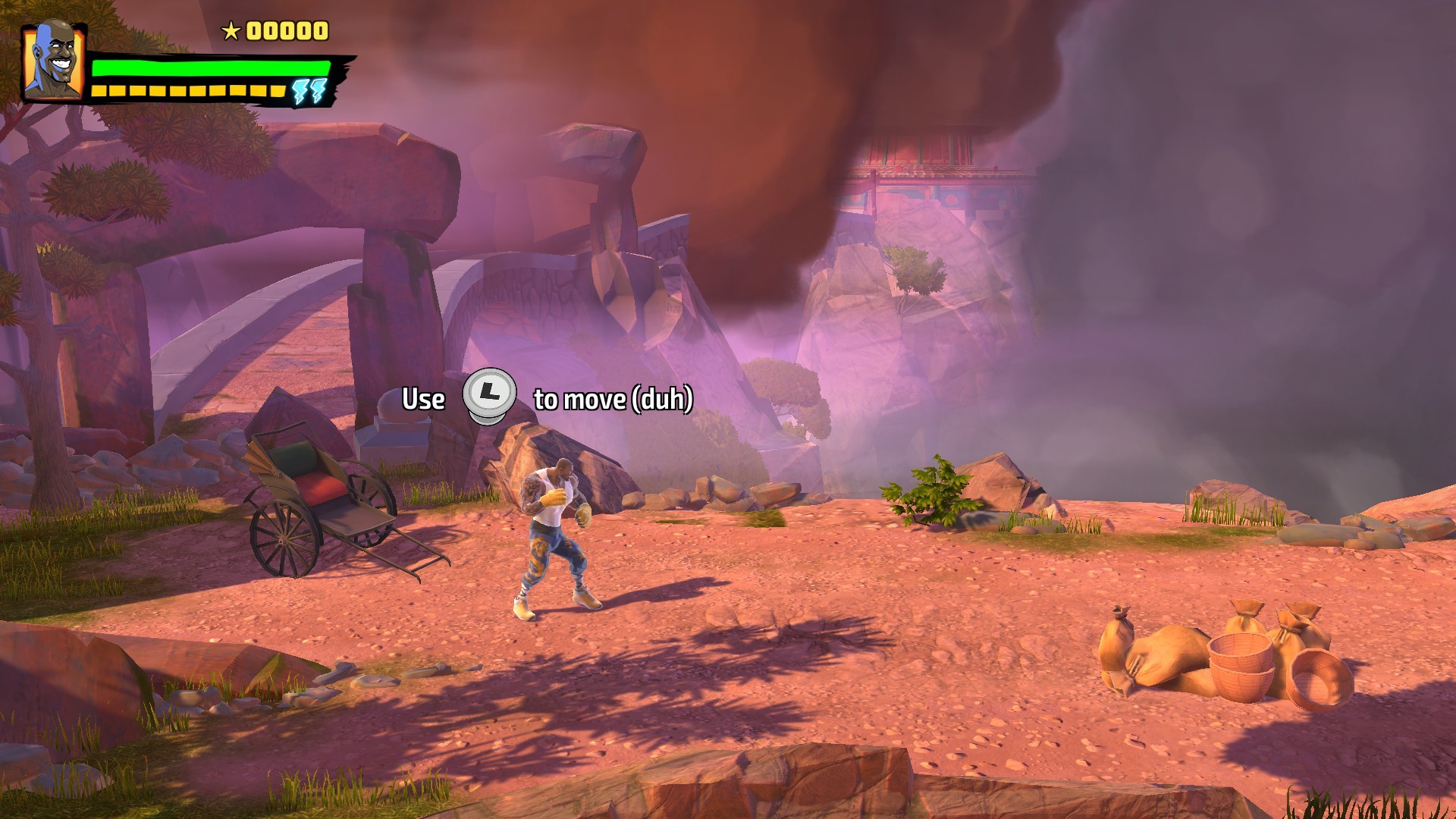
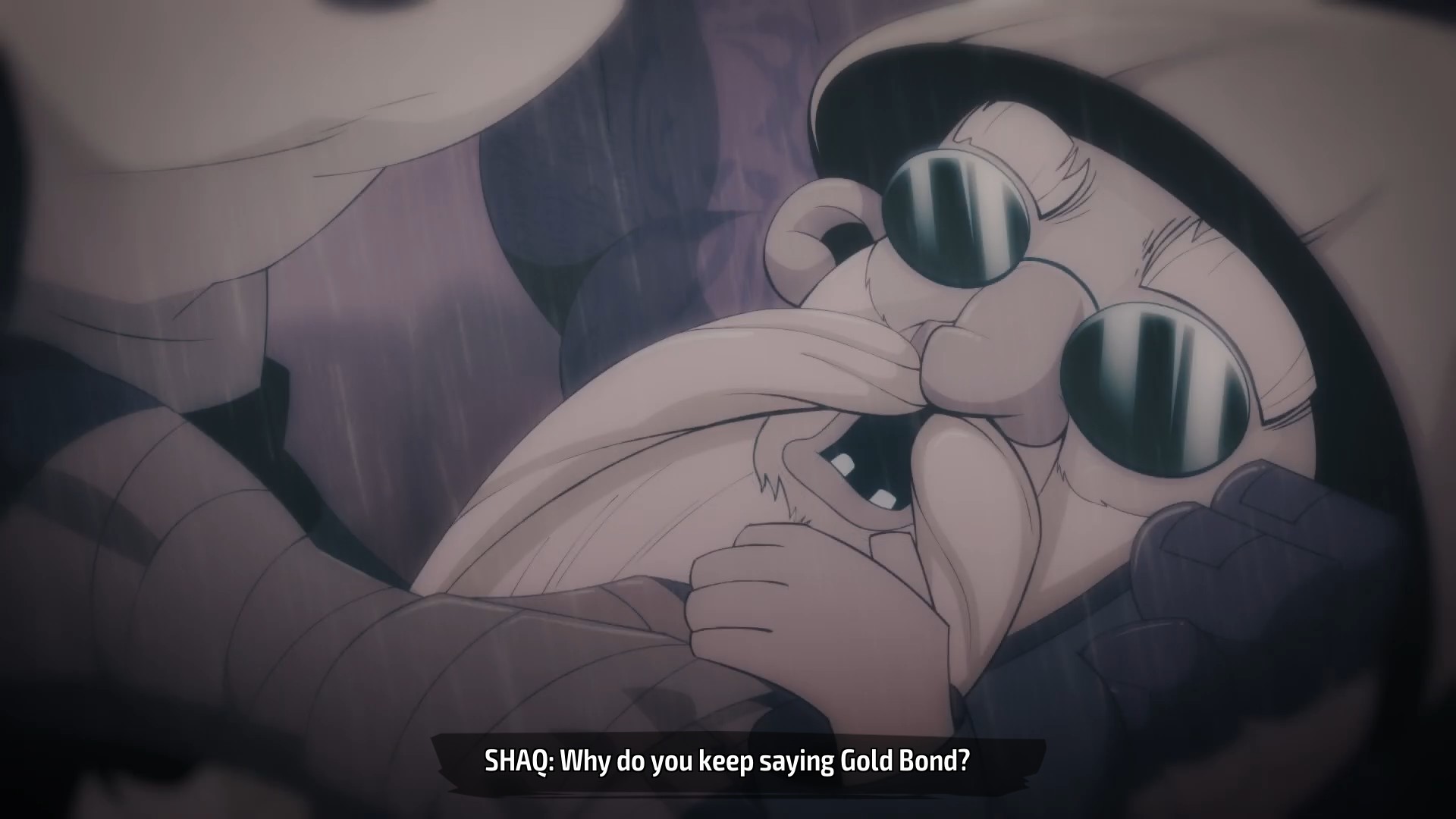
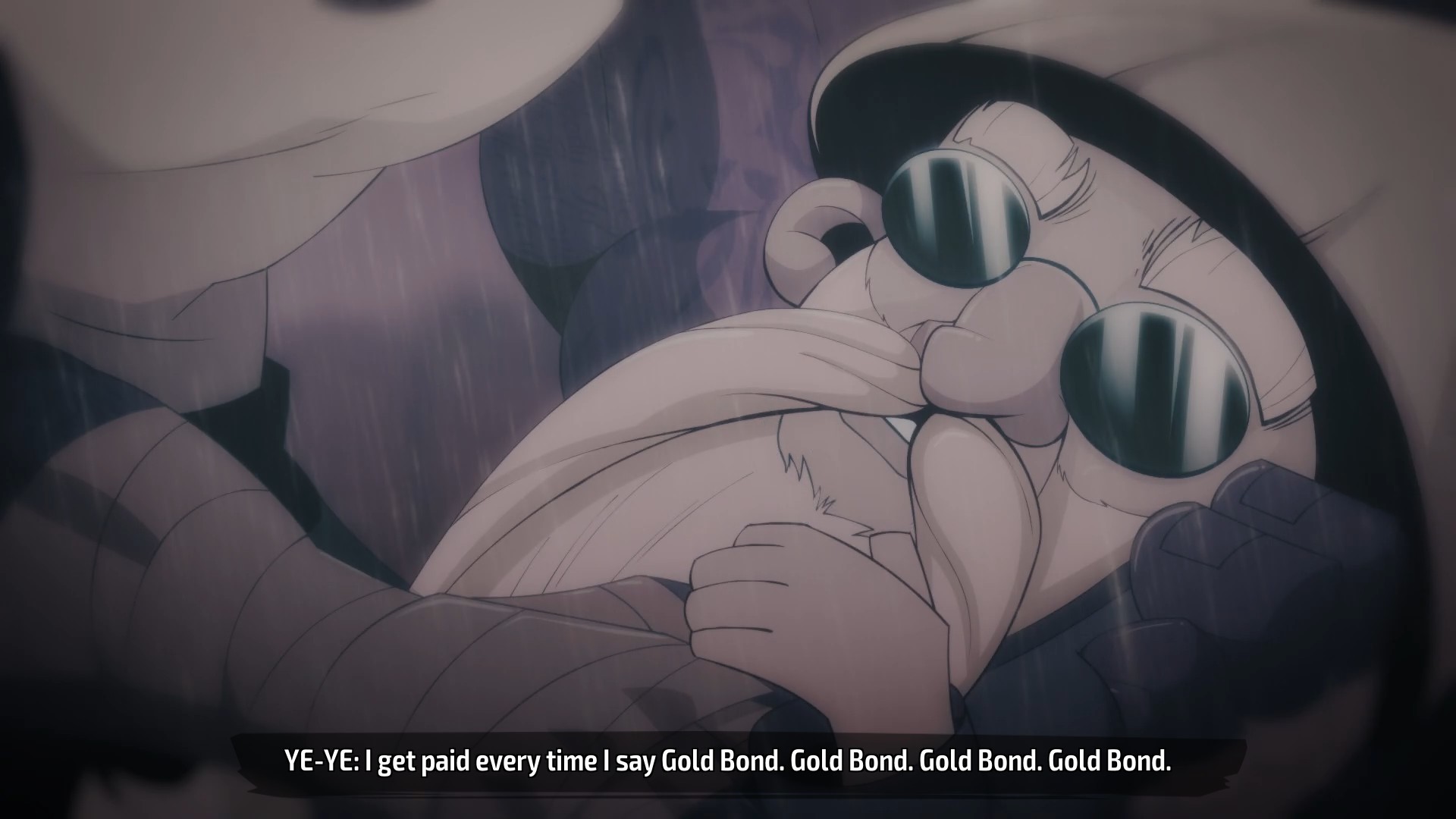
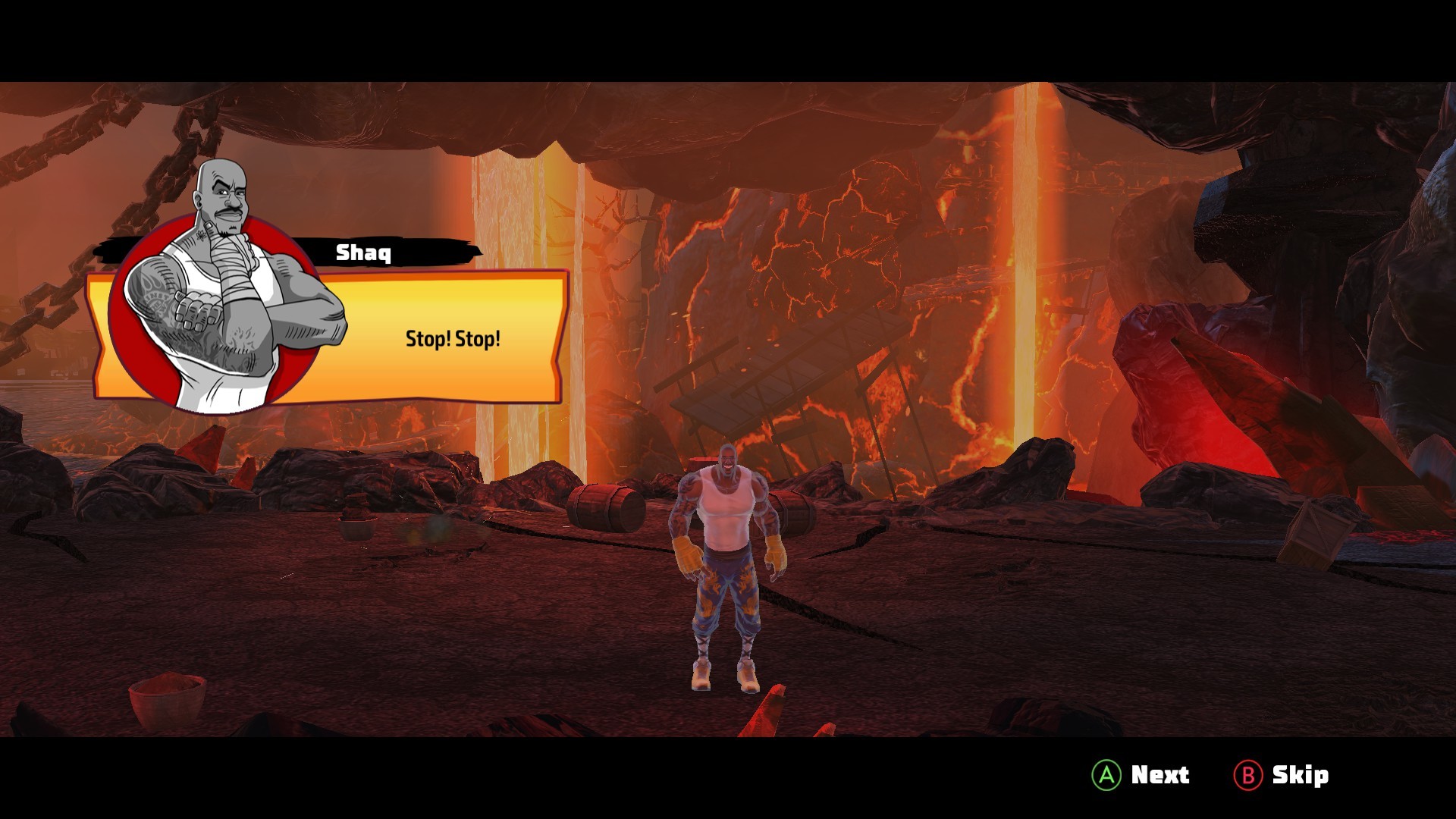
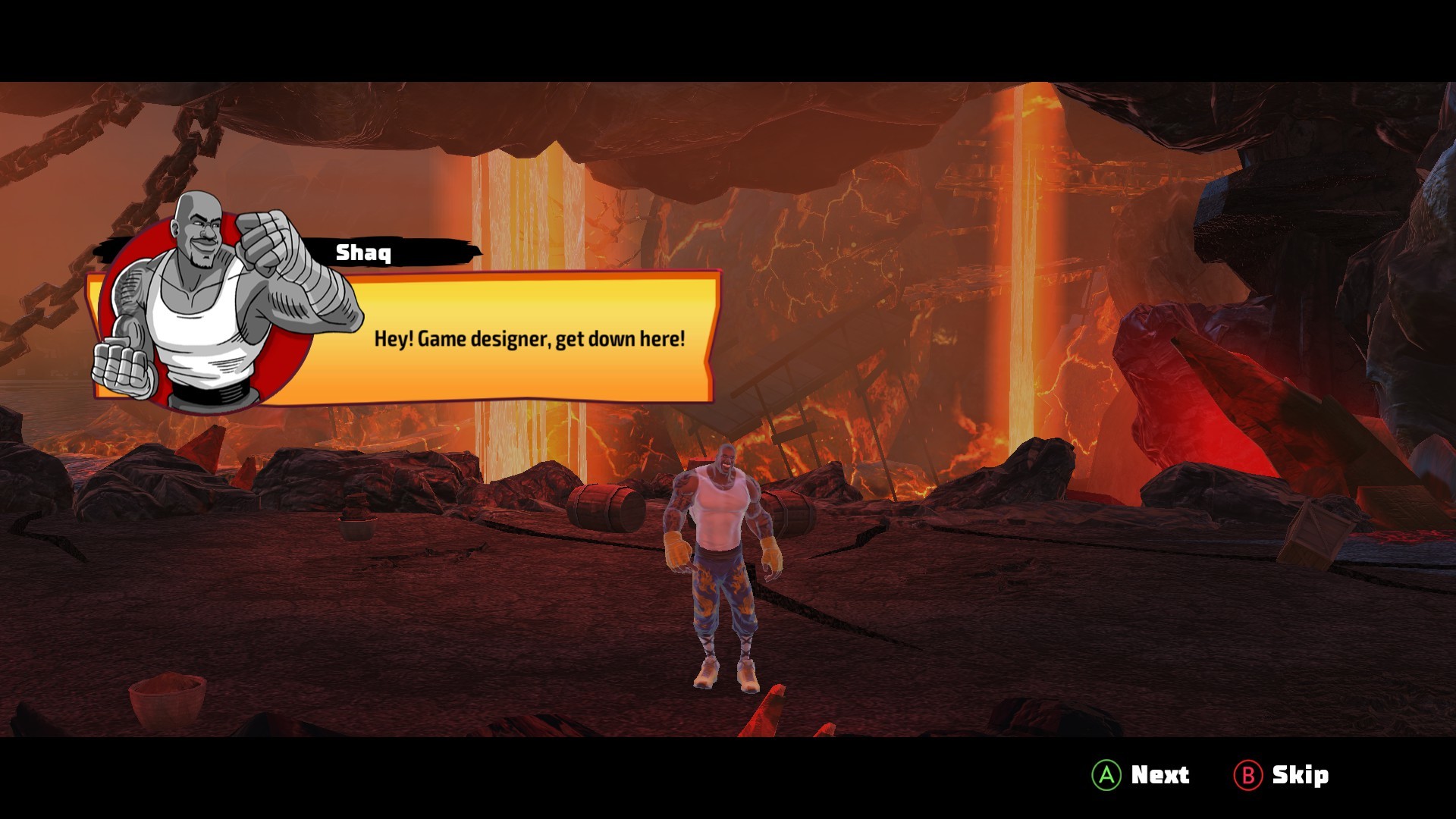
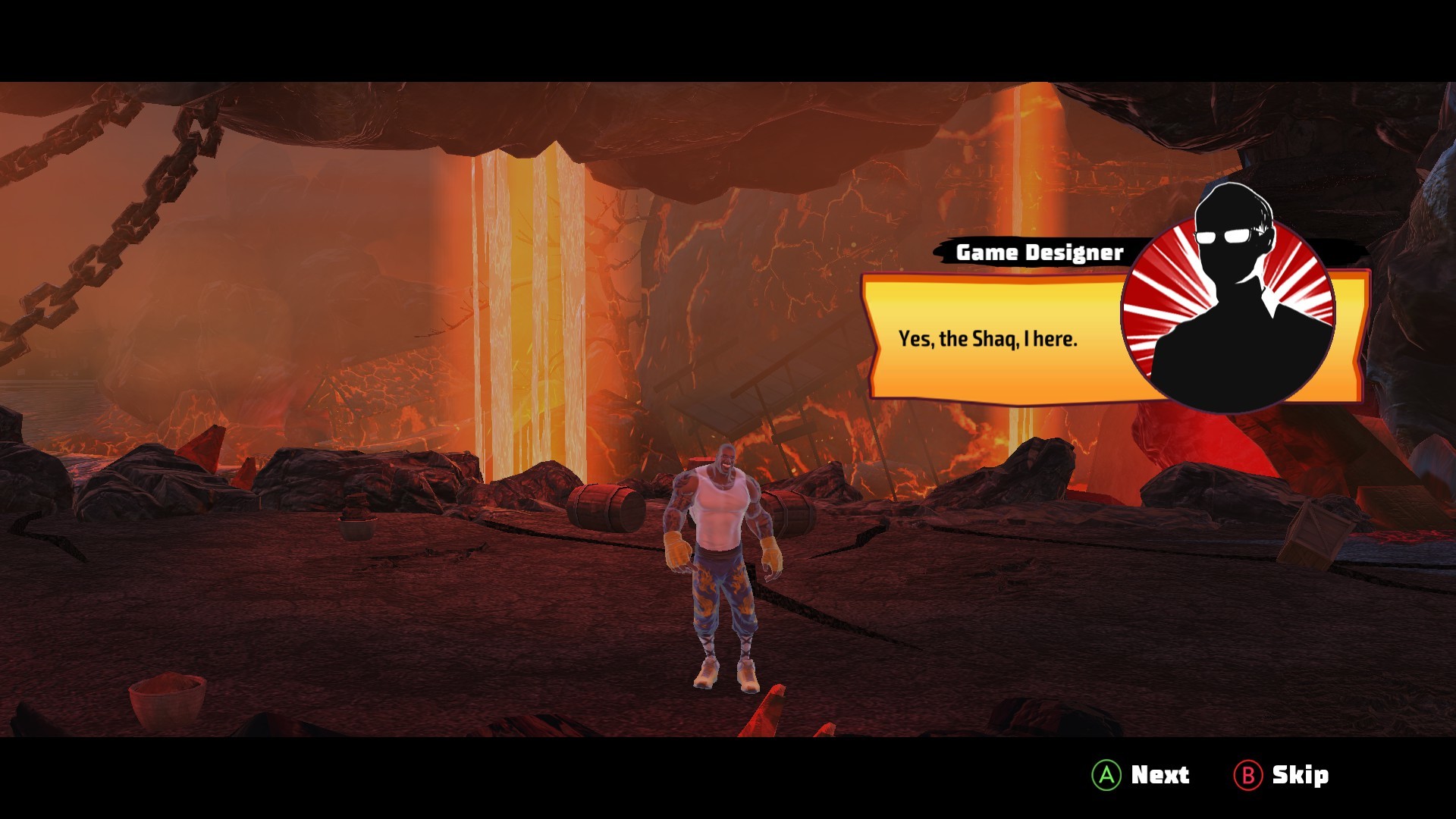
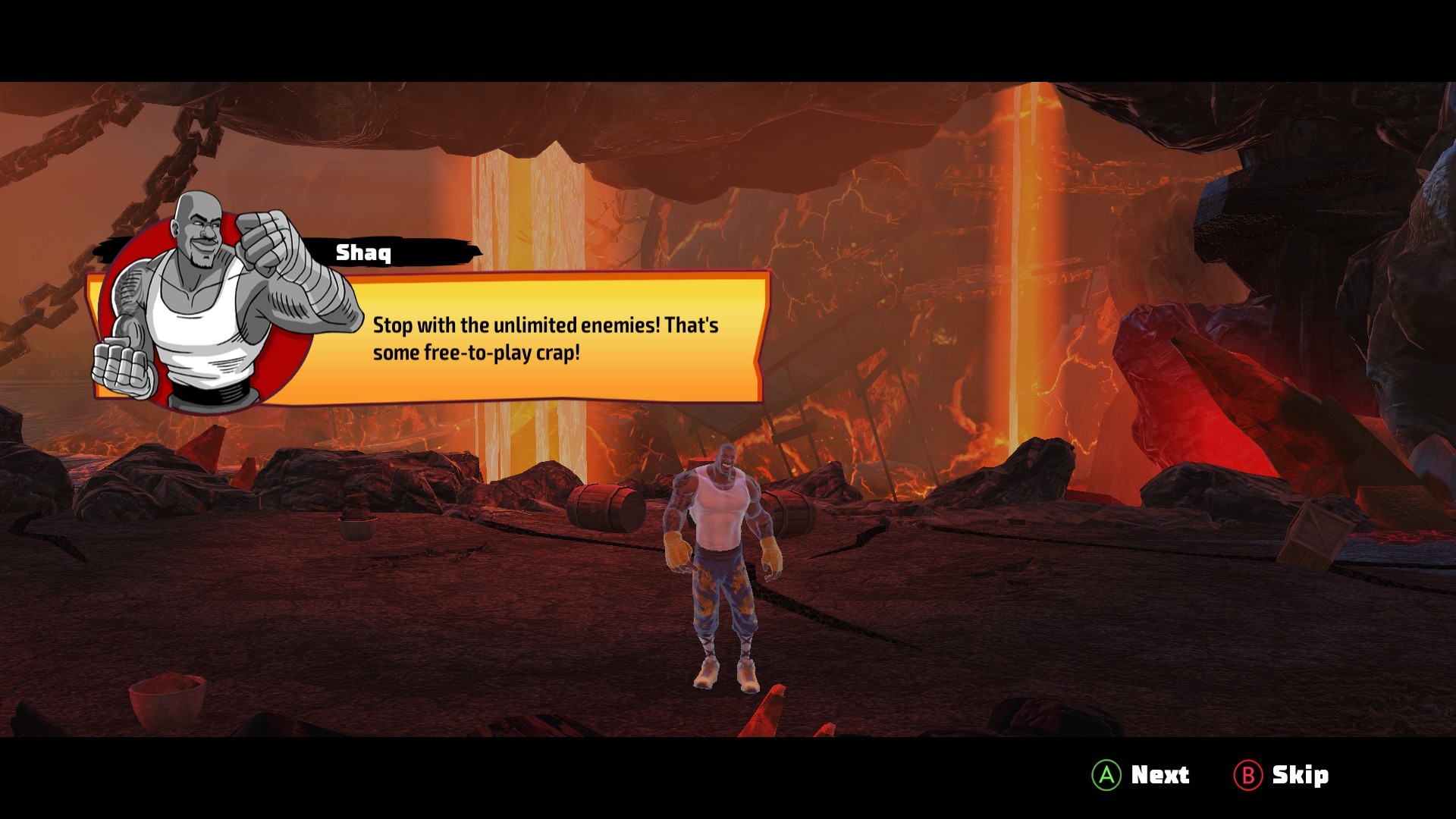
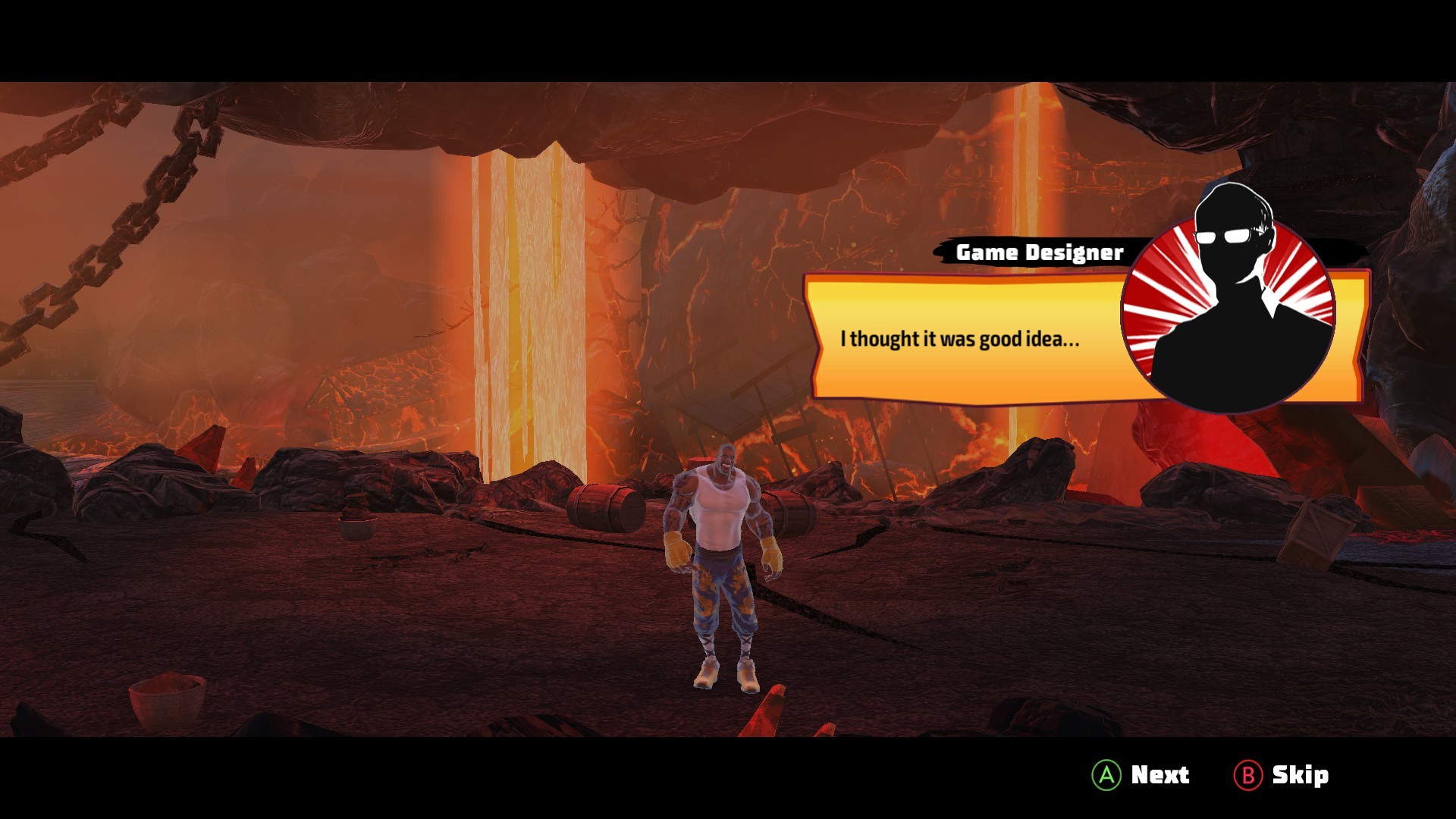
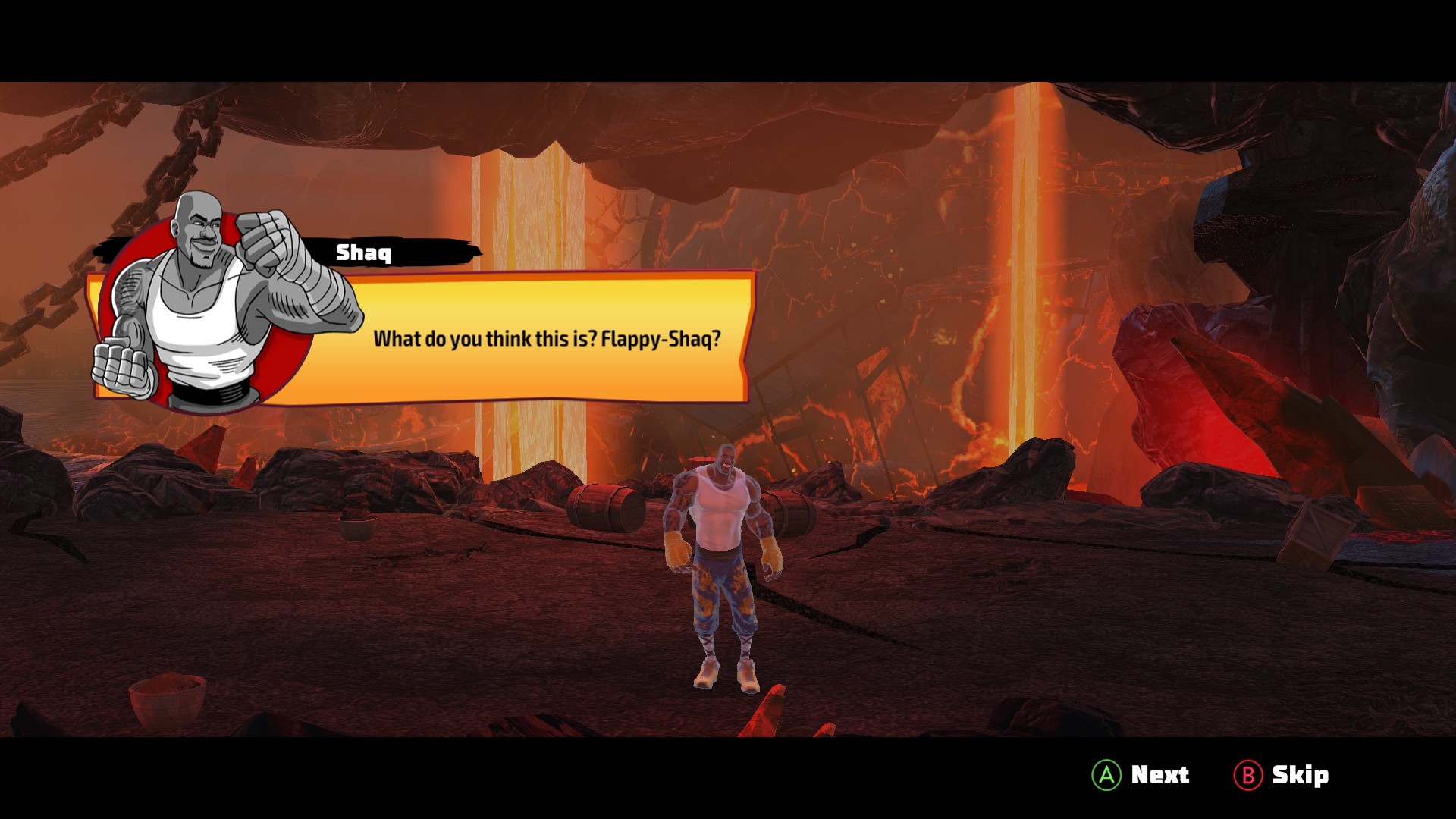
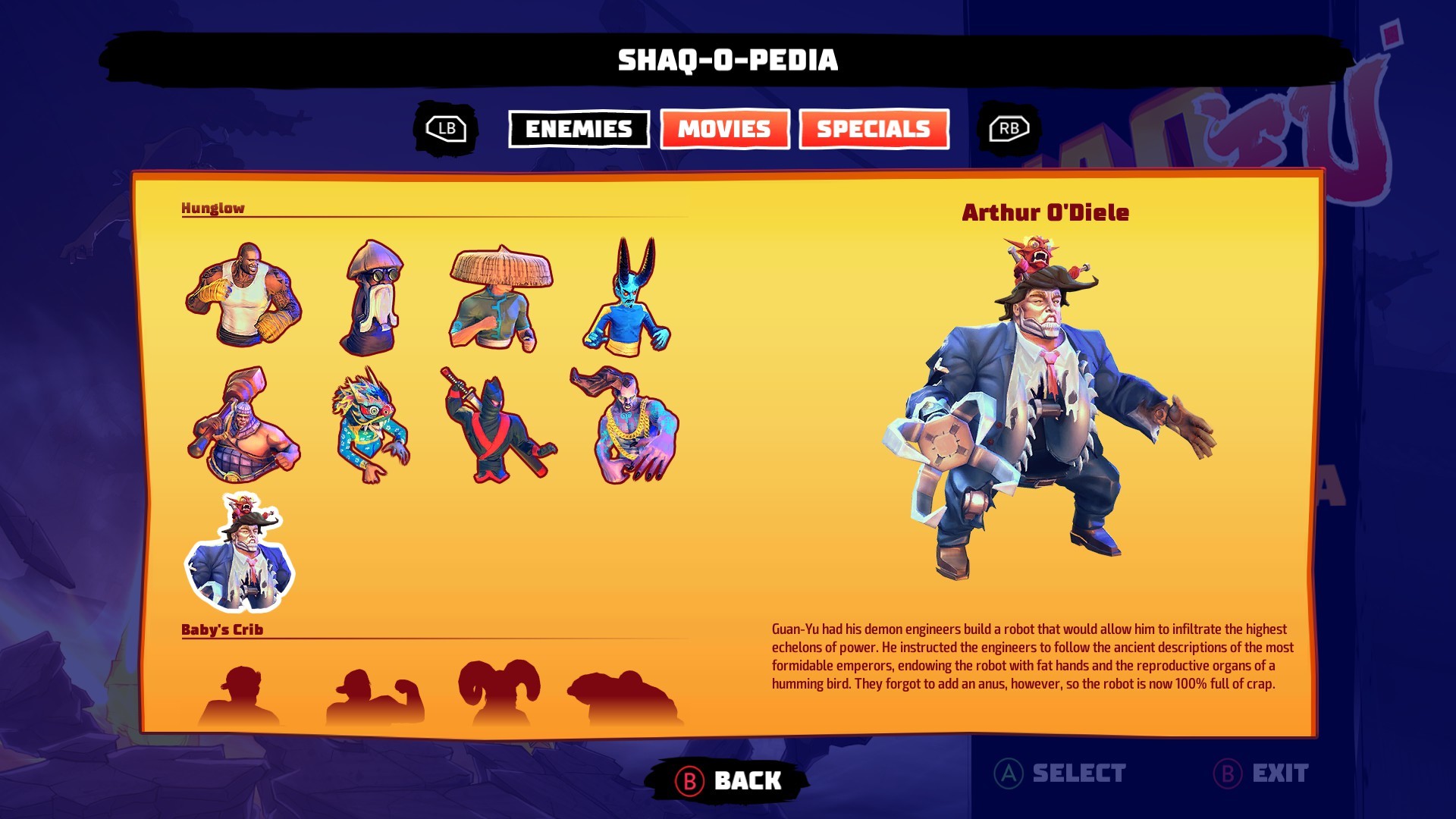
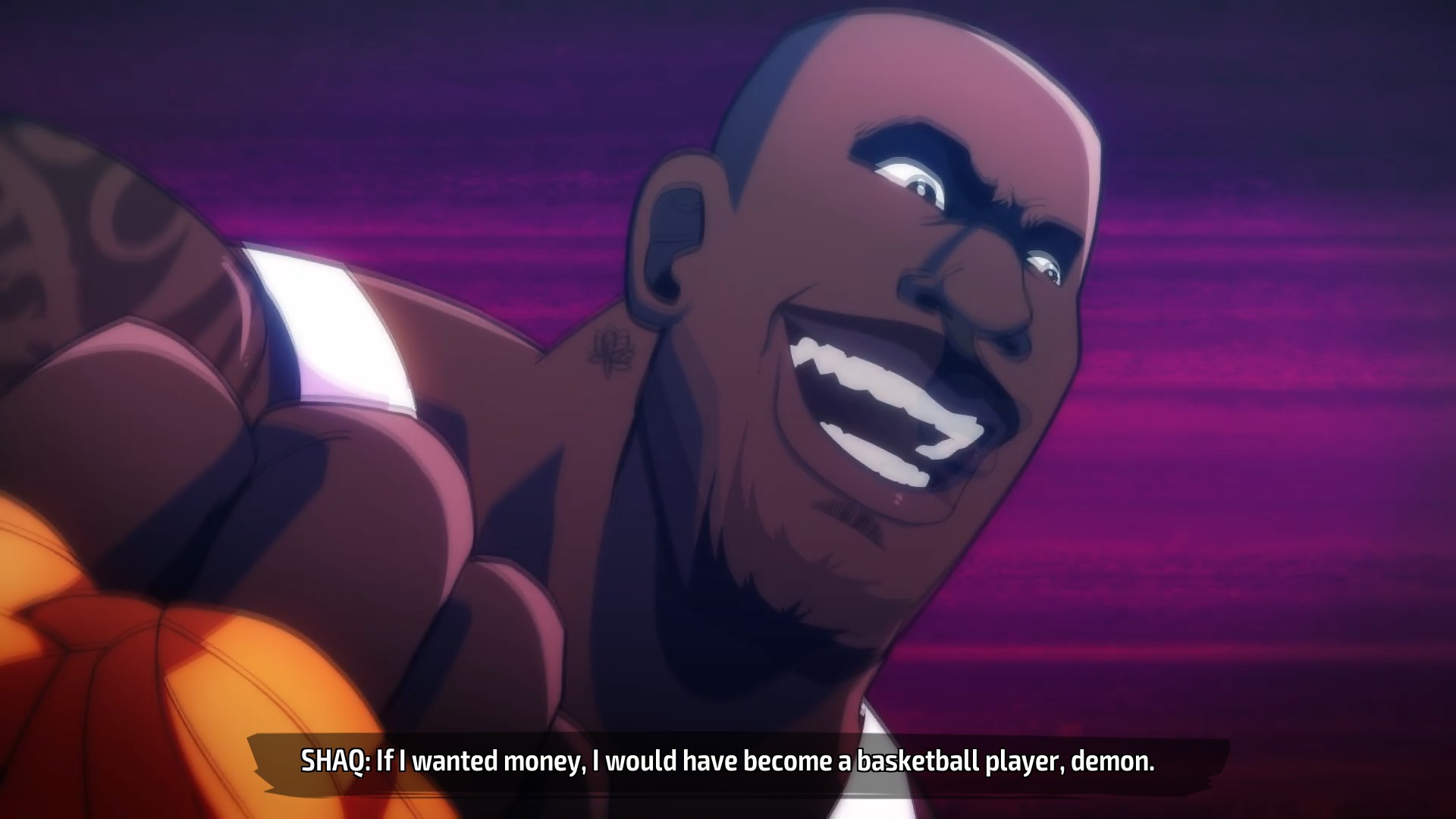
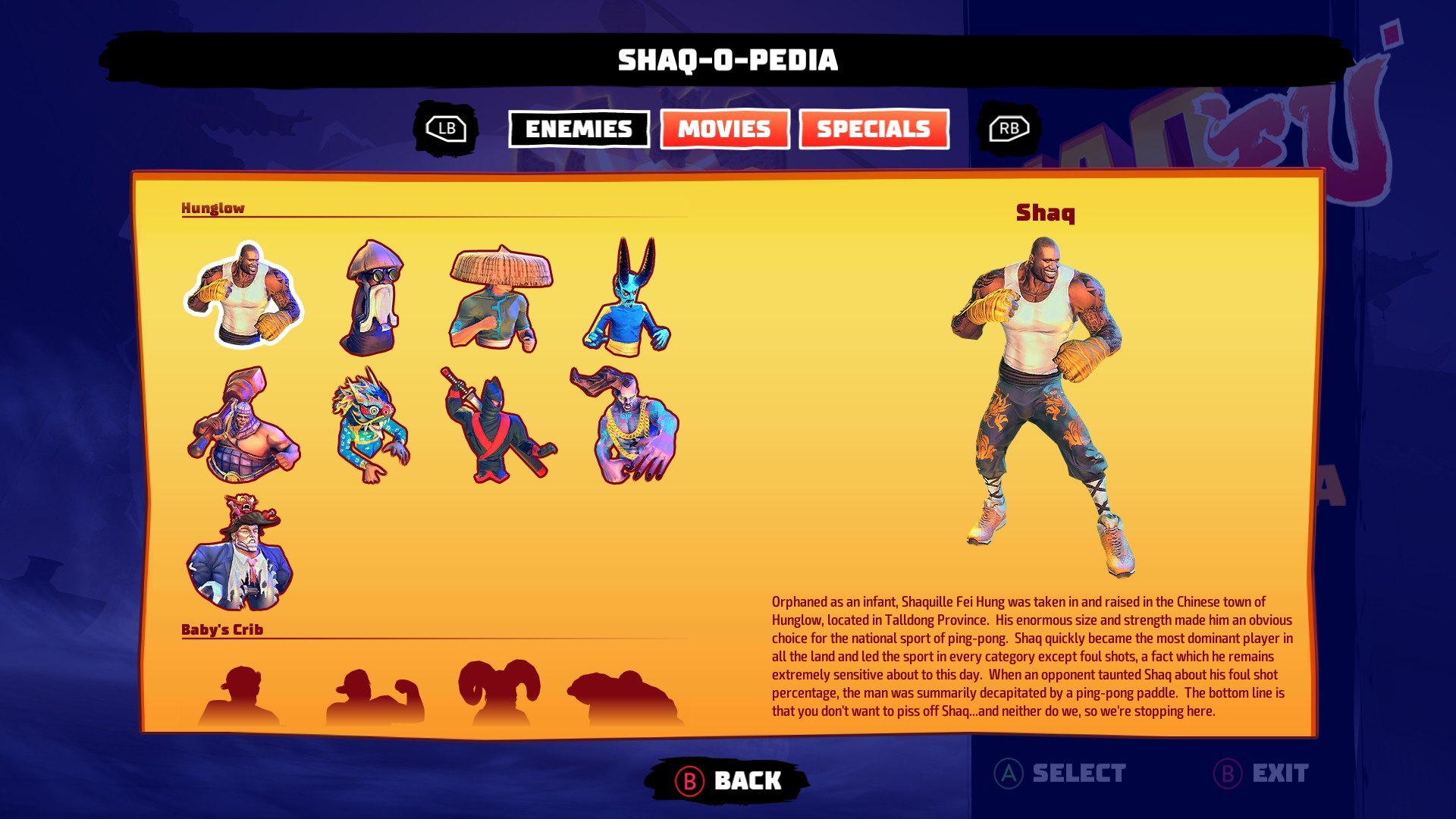
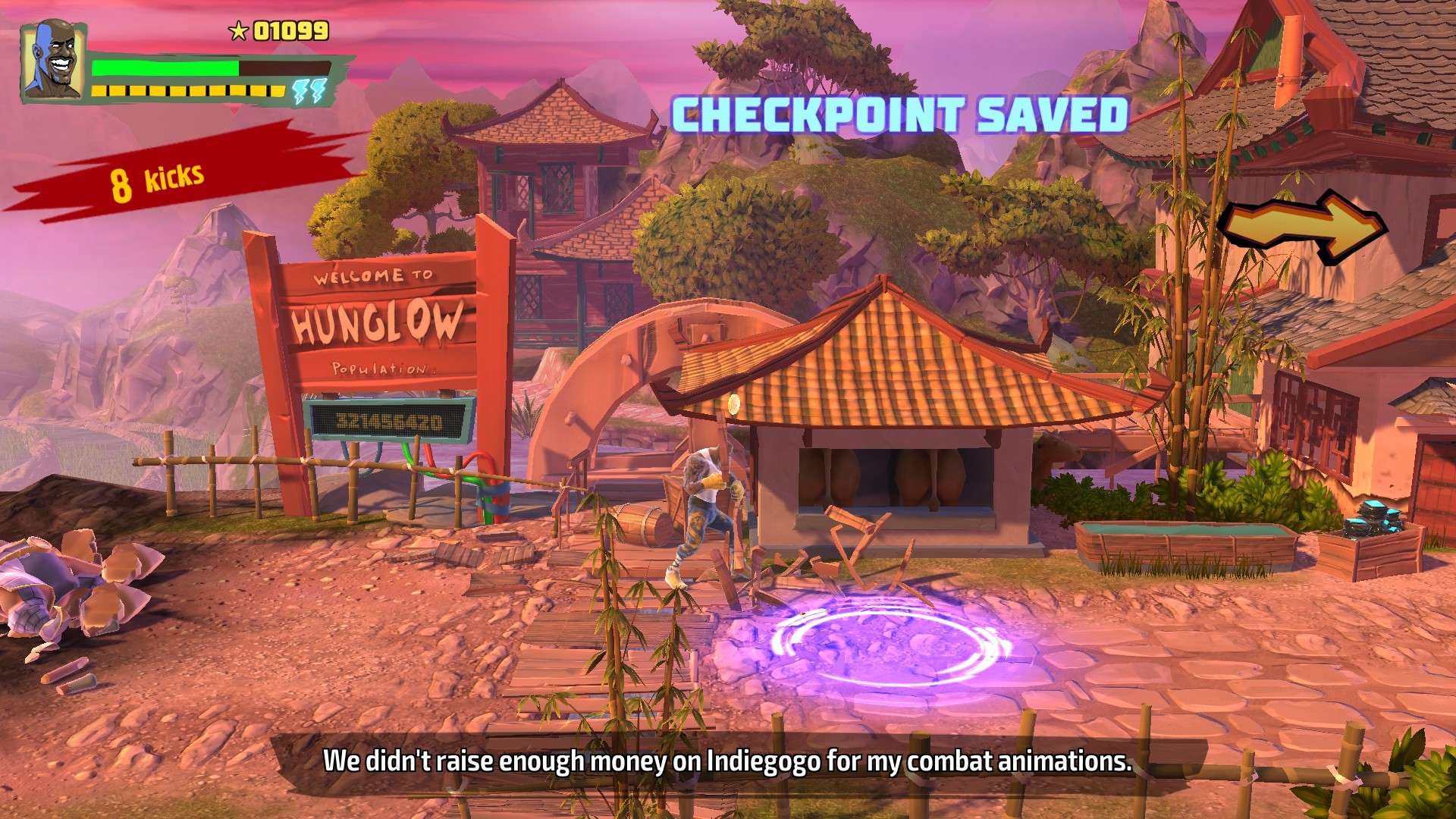
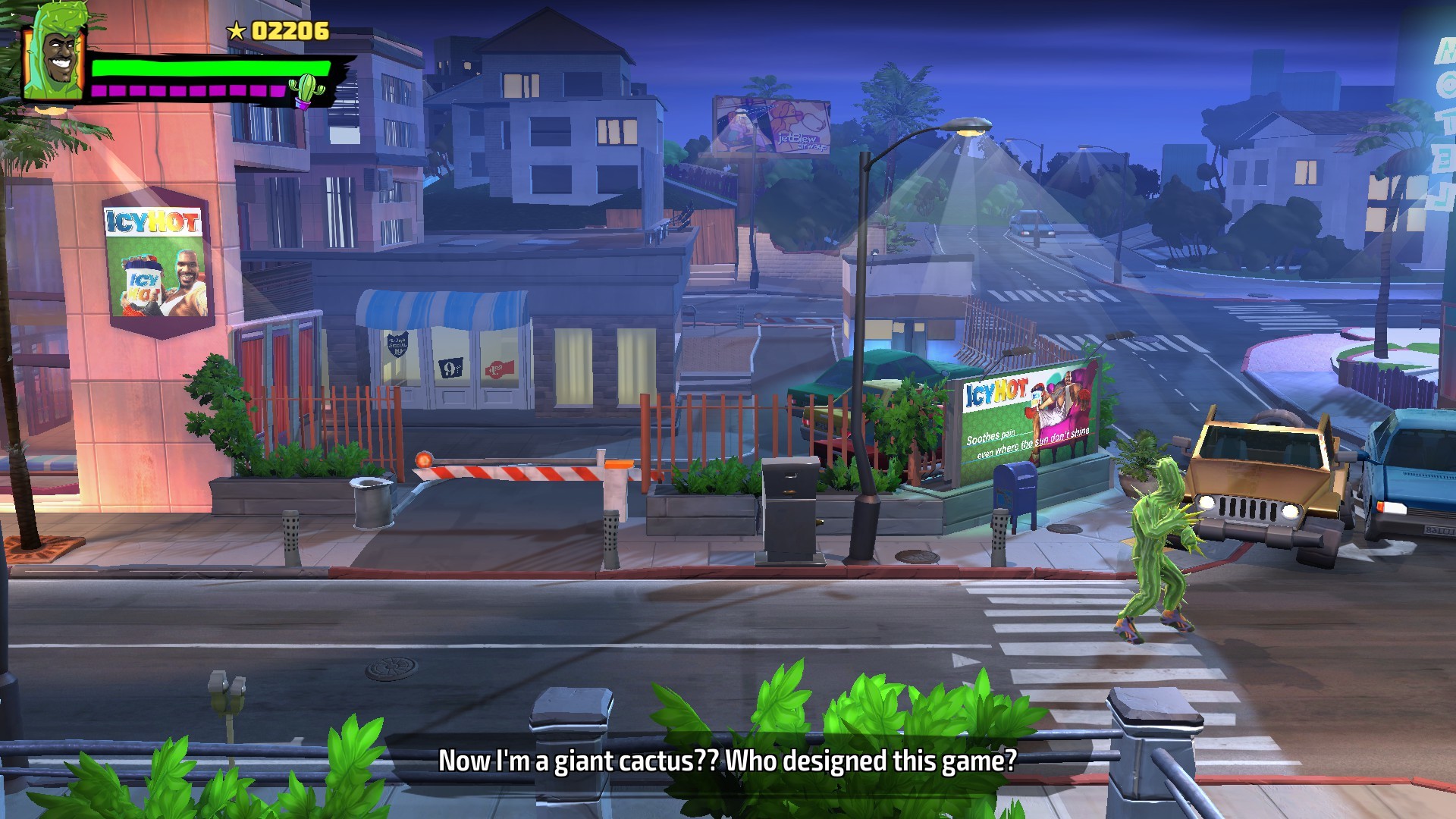
Shaq Fu: A Legend Reborn ends up feeling most like a parody game. And it isn't the worst parody-game I've played.
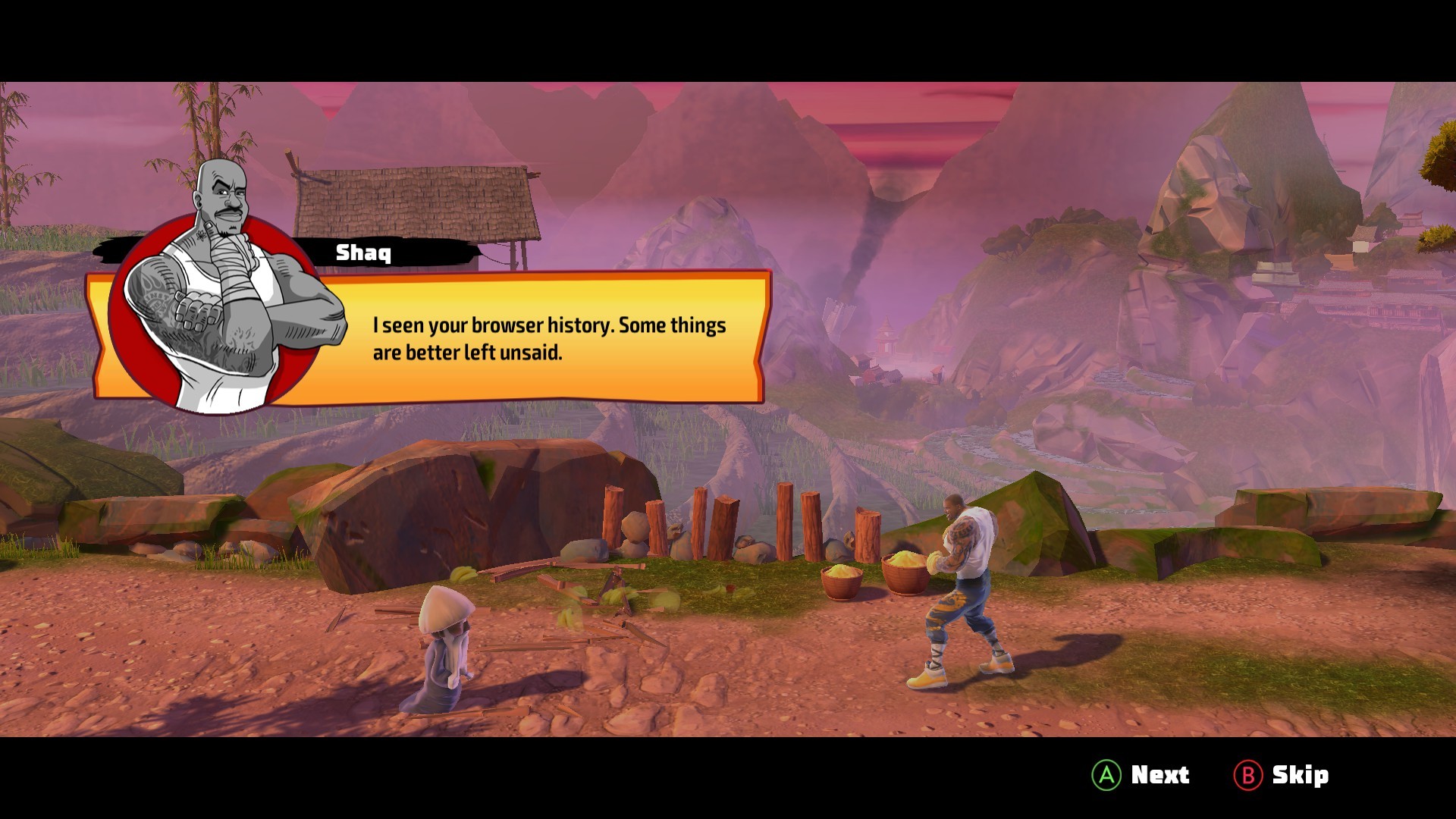
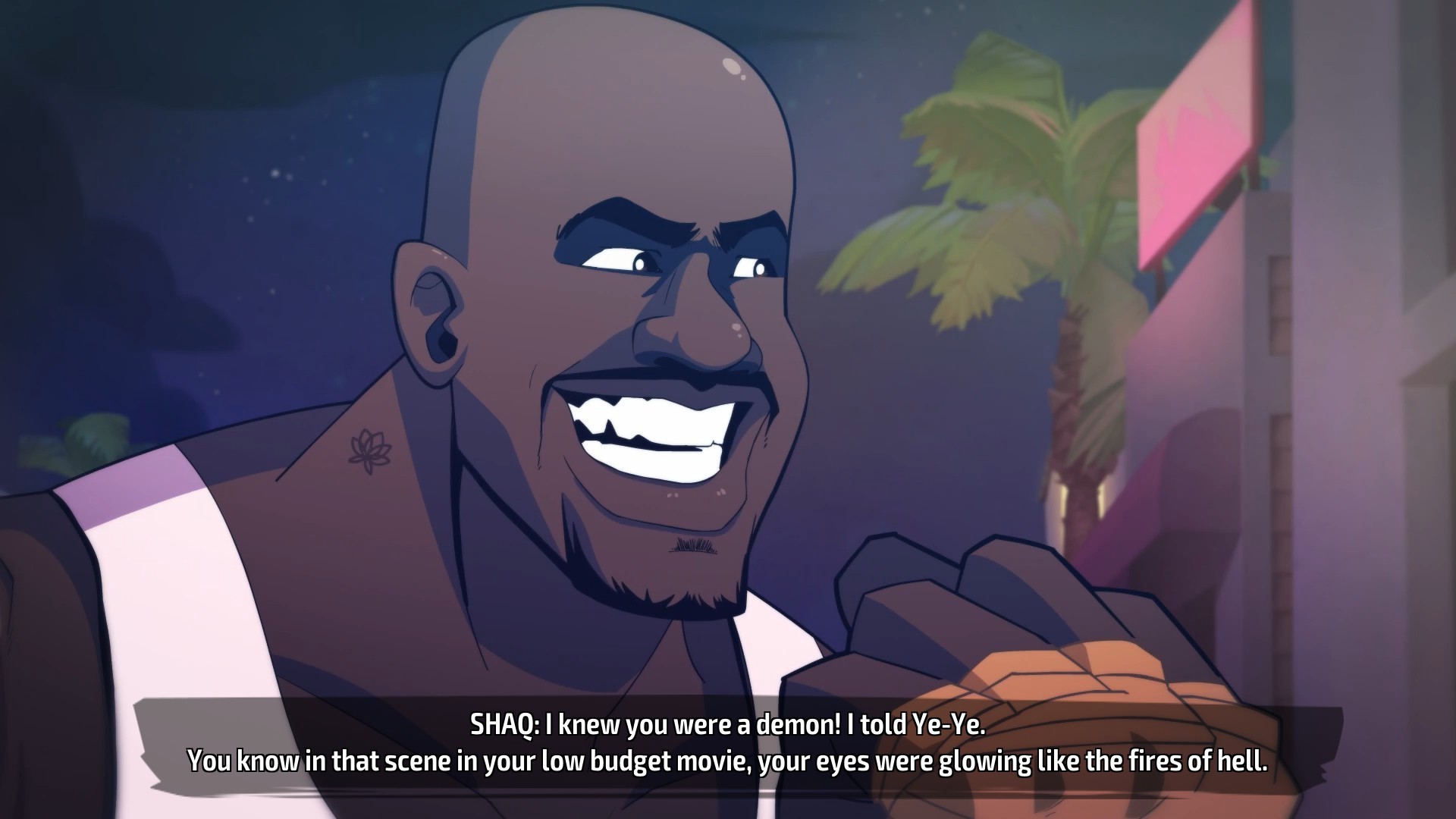
Its mechanics are simple, but basically functional -- at times, even "fun." And what I appreciated the most in the first stage was the game's off-the-wall humor.
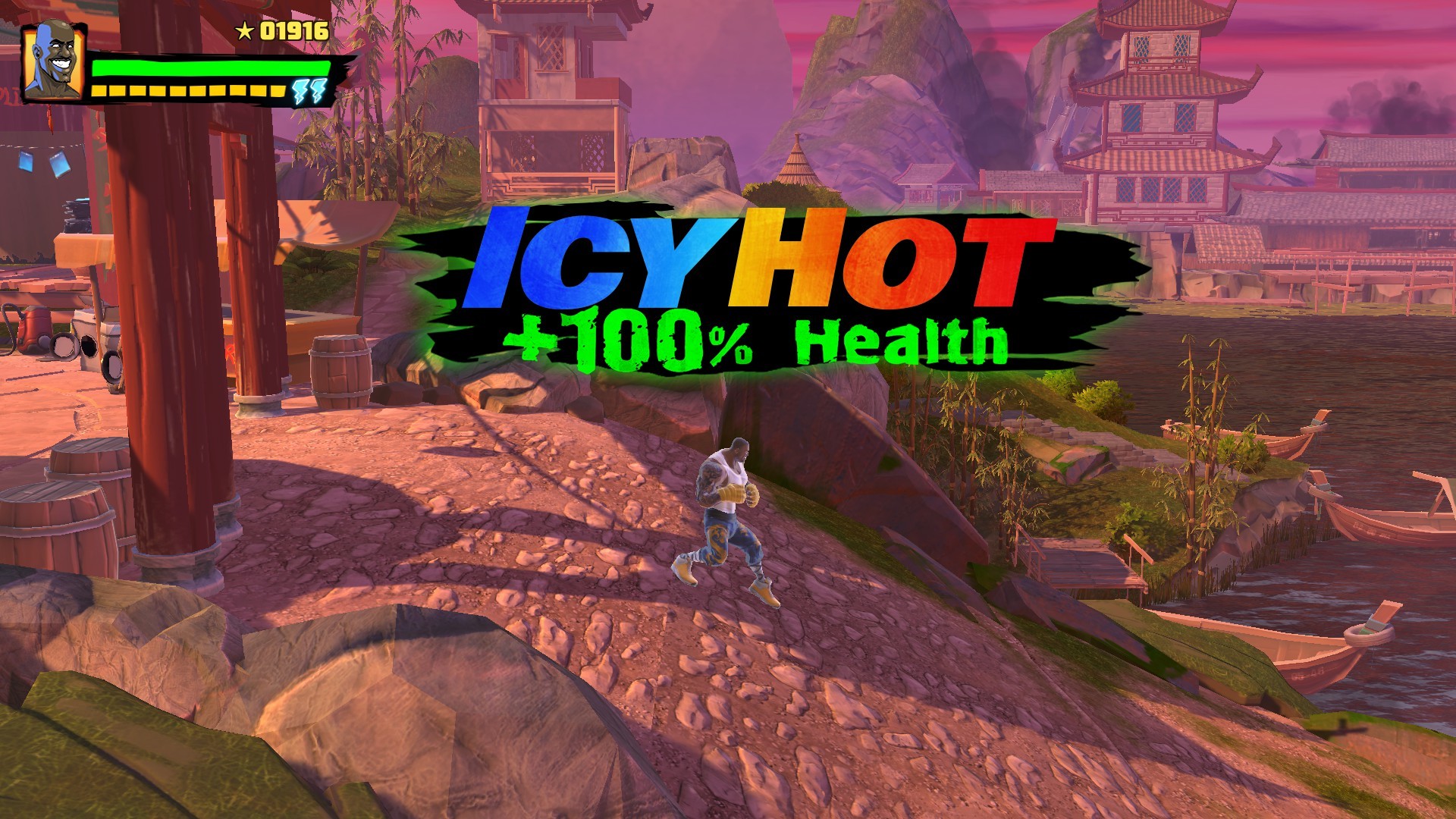
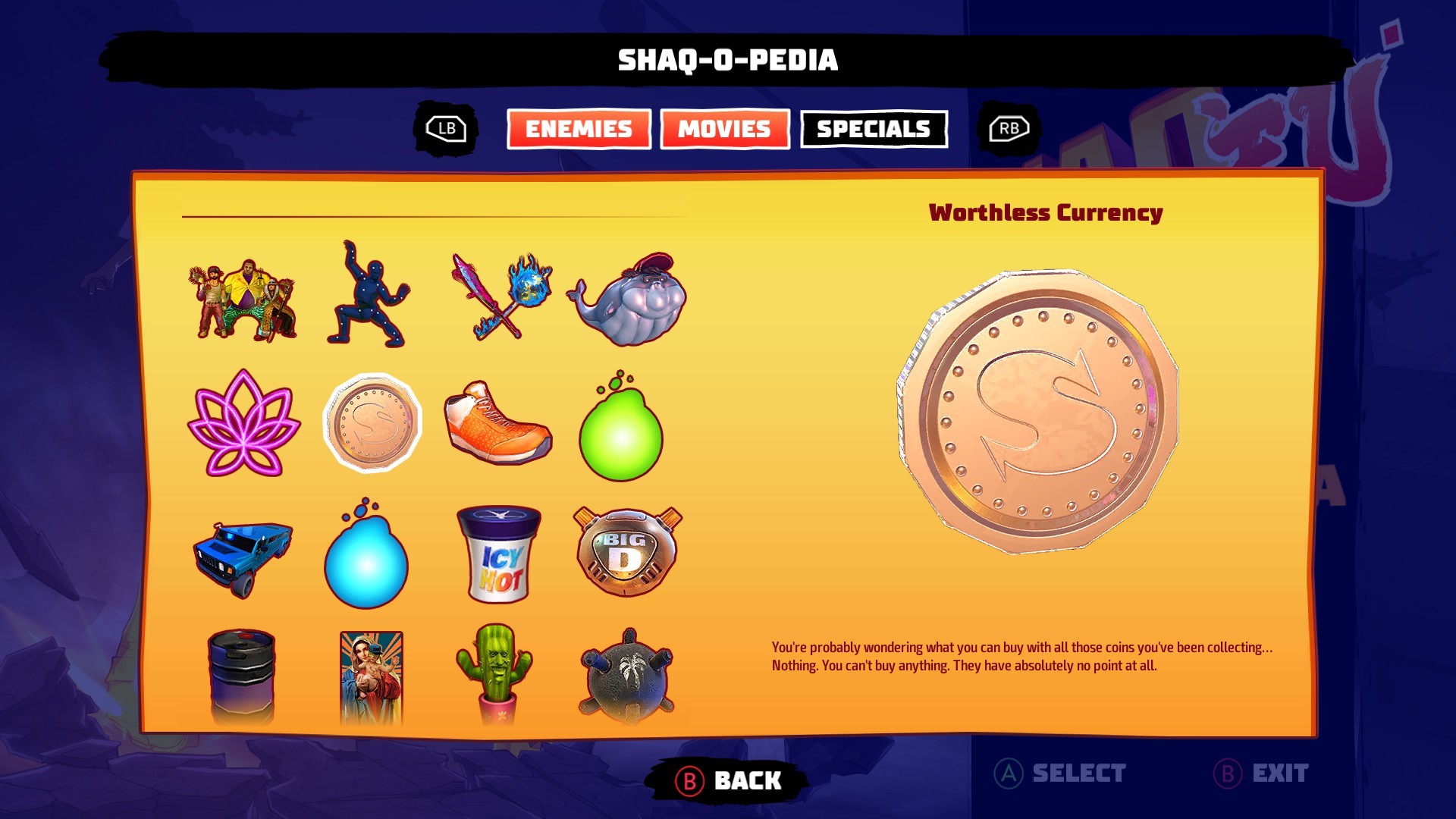
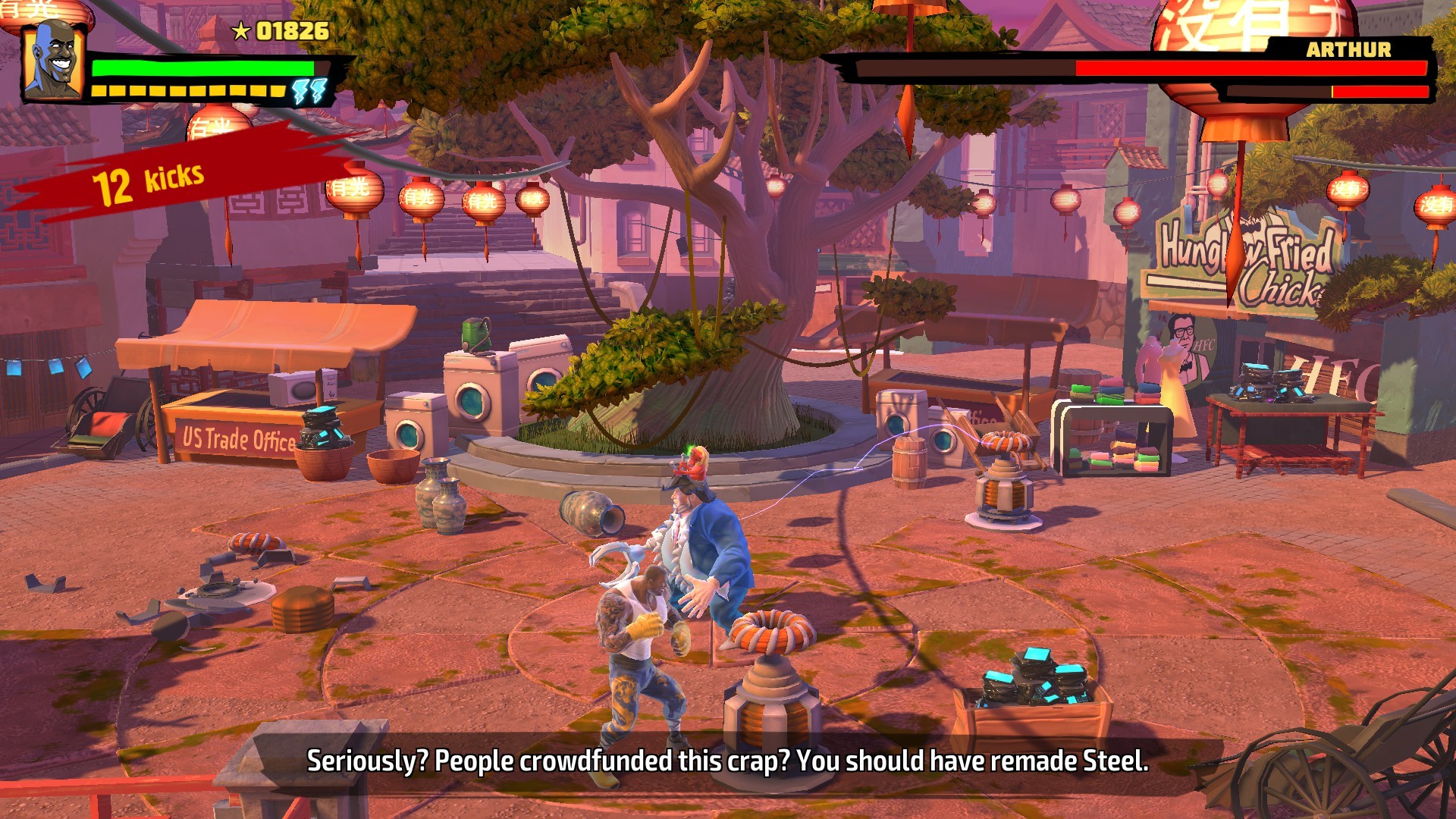
But Shaq Fu 2's gameplay gets stale real, real fast. Levels have no meaningful interactivity, there's very little variety in enemy behaviors (most of them are total pushovers), and combat fails to evolve over the course of the game. Actually, of the two (!) power-ups Shaq can find, the second one manages to be even less interesting than mashing the punch button.
Most of the time, Shaq Fu 2 doesn't know what to do except throw wave, after wave, after wave, after wave, after wave, after wave of enemies at you, for minutes at a time.
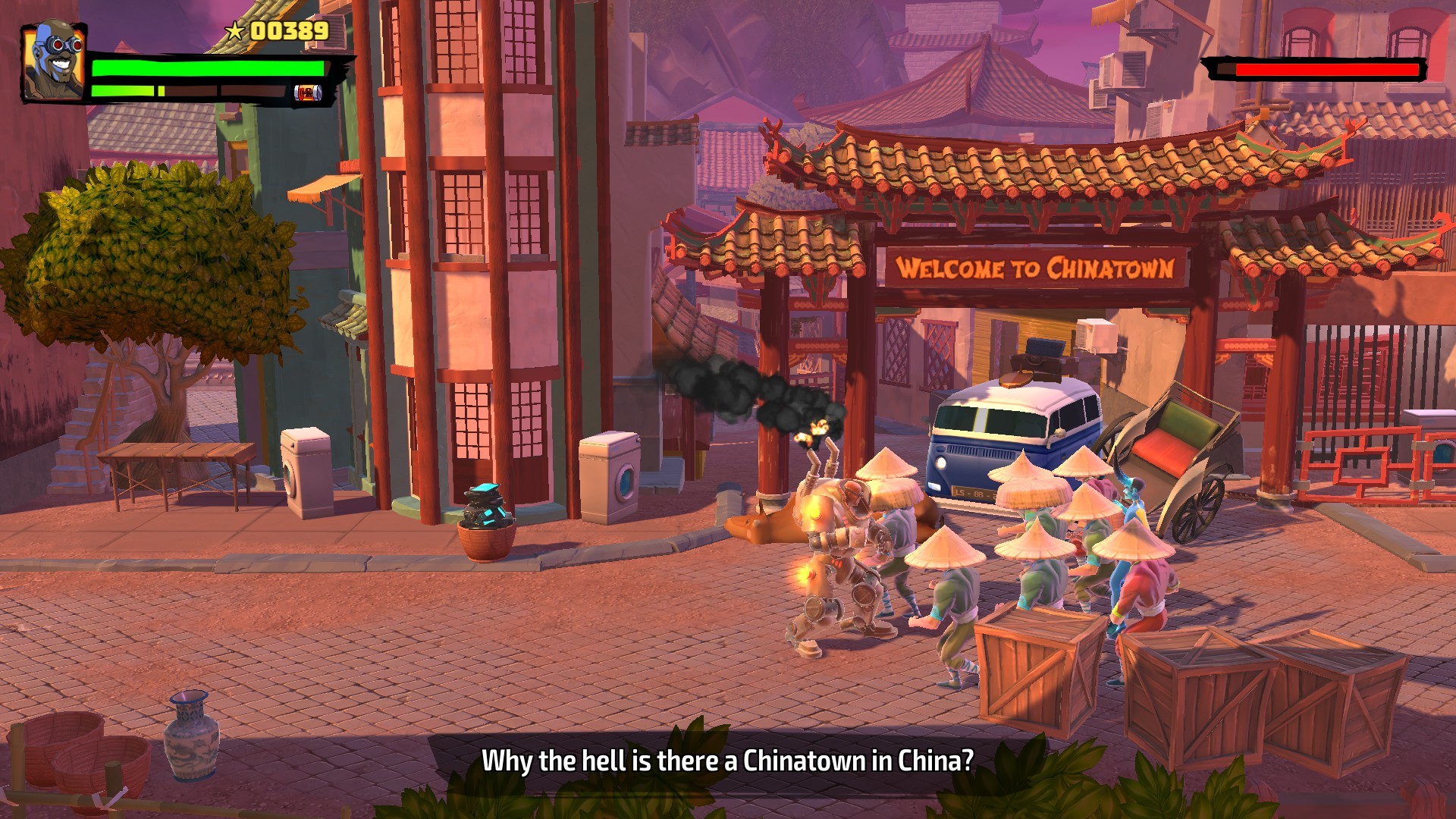
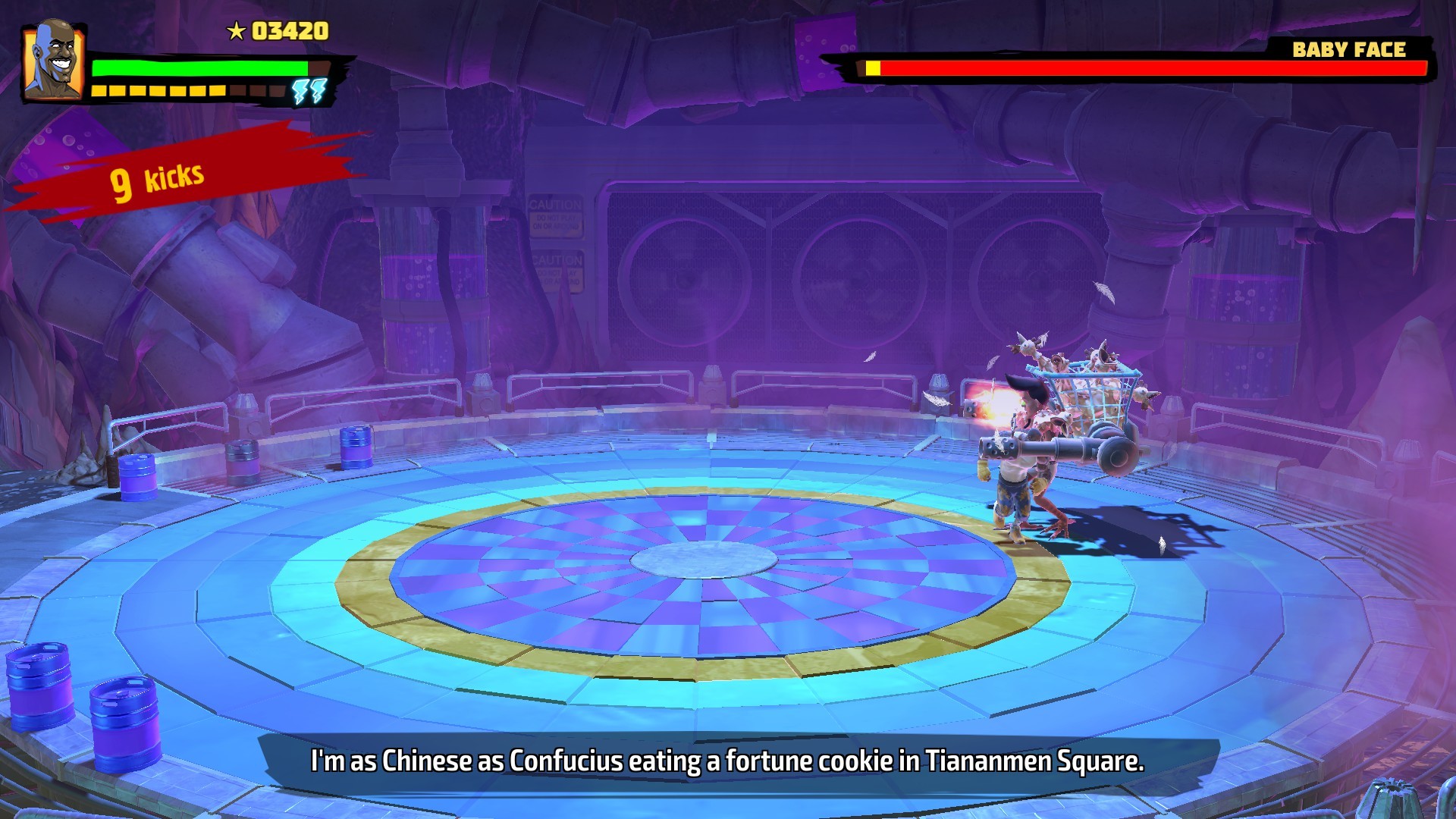
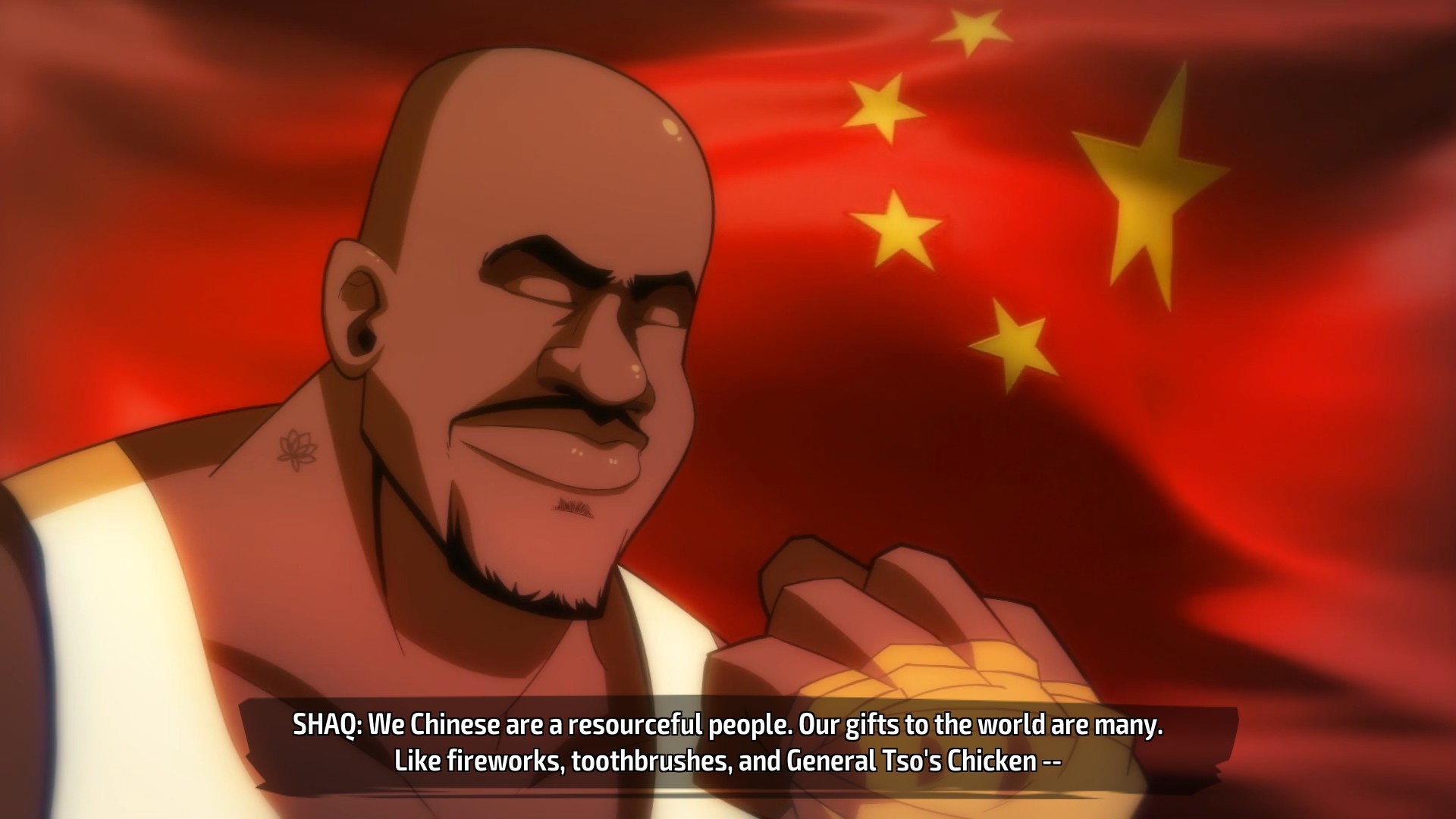
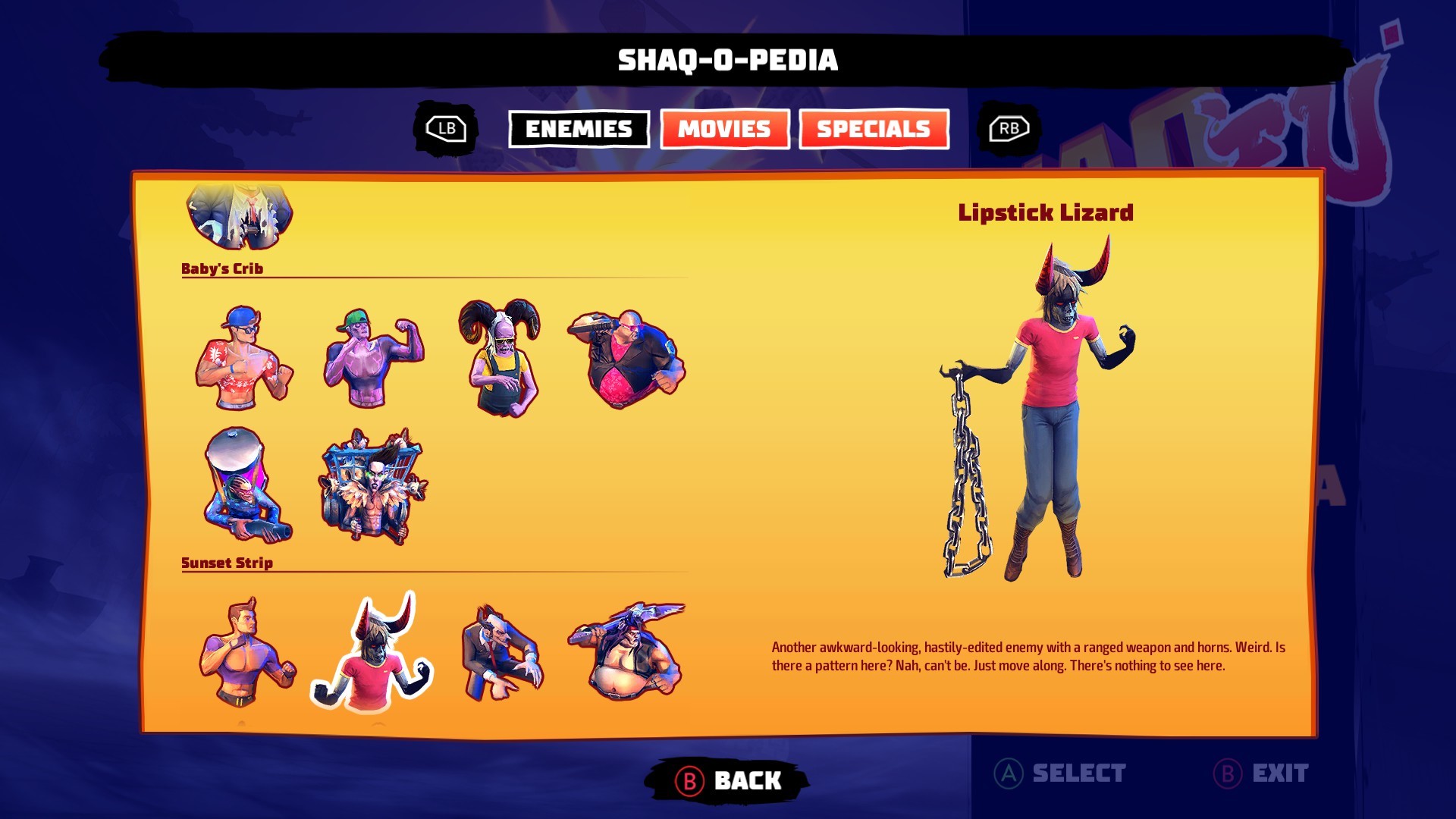
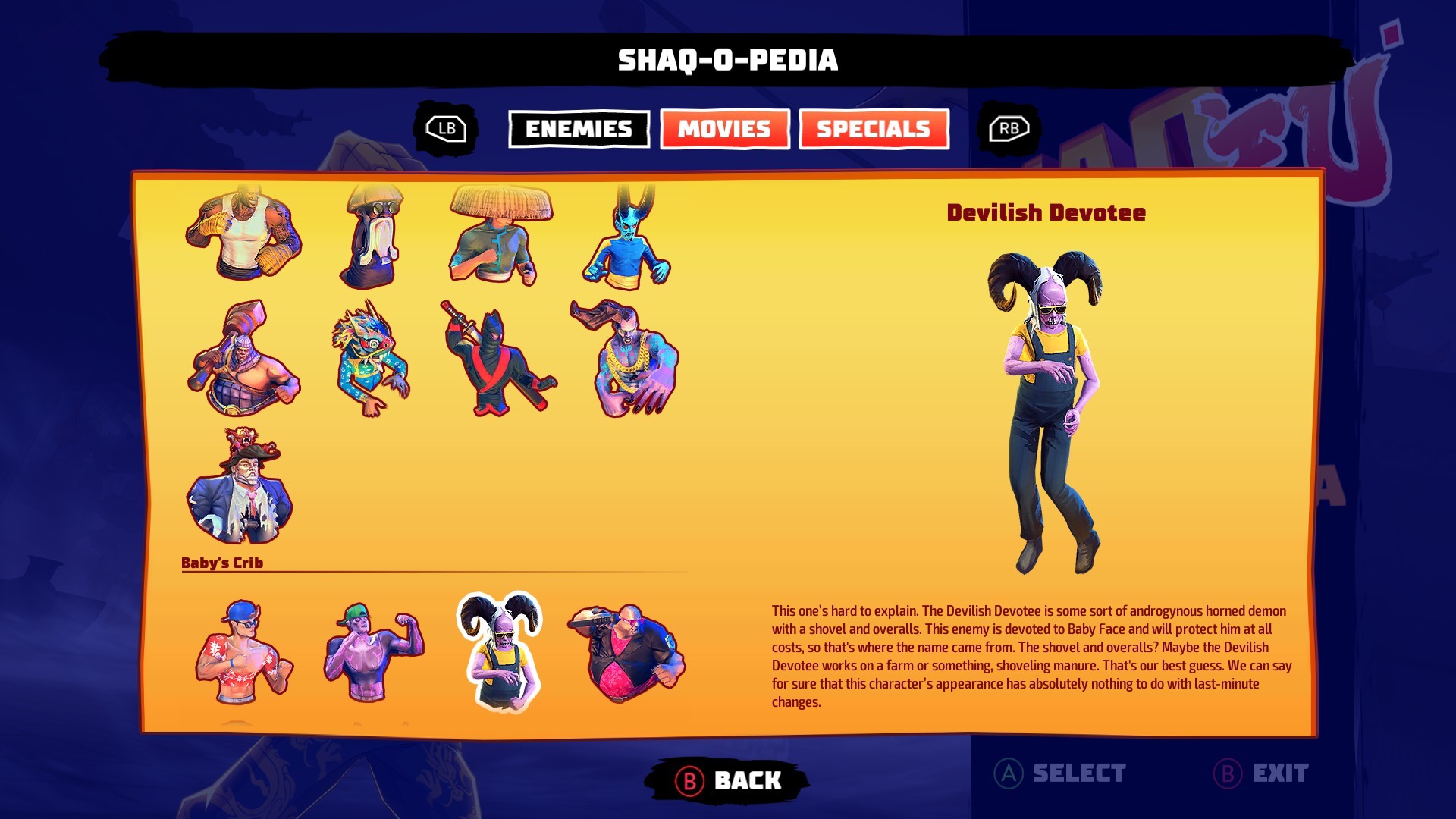
... and sadly, the game's sense of humor also peters out pretty quickly. Its references to celebrities felt just a little too "safe," like the team was afraid of drawing too much attention to them. Most of the jokes felt low-effort. (I would have expected more of the "Shaq's Chinese?" running gag, which was weirdly under-utilized.)
Shaq Fu 2's troubled development story - which the game attempts to lampoon, to awkward result - may really have been a blessing in disguise. As boring as it was to play through the game, it was still, thankfully, only three hours long.
So, file Shaq Fu: A Legend Reborn under "mocks game design mistakes that it has itself made." And like I said, not the worst of those I've played.
I adapted to how Hungry Cat Picross has different rules than I'm used to -- a little reminiscent of SquareCells, but simpler. And I could tolerate the fidgety UI, particularly how dragging to paint could also change the paint color, when dragging to the bottom of the screen.
But what I totally ran out of patience for was that some of these puzzles have multiple solutions. Well, the hints have multiple solutions; only one of them is "right" for the puzzle. There were a handful of times when the puzzle was telling me I was wrong, even though all the hints were satisfied correctly.
In other words, some puzzles can't be solved purely by logical deduction; they're only solvable by guessing.
One more aspect of Witcher 3 - actually, of the whole series - that I've been saving up praise for is Geralt's voice actor.
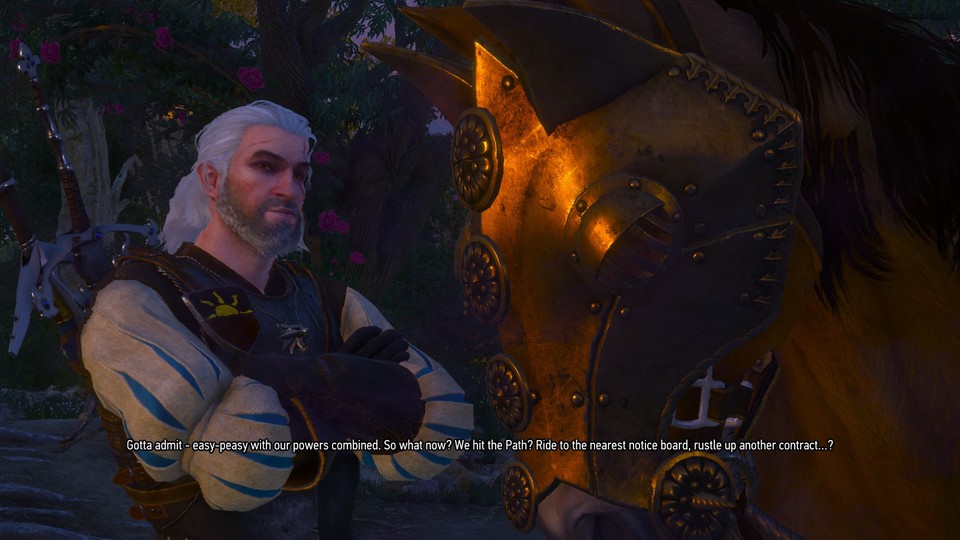
Most of the time, Geralt is a stubborn, cynical, sarcastic son of a bitch; and the delivery of his gravelly and wry lines is perfect. He sounds like exactly who I'd want to hire to clear the rotfiends out of my yard.
But then there are occasions where Geralt goes out of character - particularly the Kaer Morhen drinking scene, and the wedding sequence in Hearts of Stone - and these superb performances are some of the game's most memorable moments. "Drunk Geralt" and "Happy-Possessed Geralt" shine brightly in their contrast to the White Wolf from the rest of the game.
That such a somber and depressing world can still be livened-up in these moments is a testament, both to CD Projekt's writing, and to their voice actors' performances.
I'll miss Geralt, and fondly remember his journeys on the Path. 160 hours later, I've finally exhausted my quest list -- and though I'm sure there's even more to do! because there are still so many white question marks on my map; it's time to move on.
I am surprised it took this long for someone to take advantage of Factorio's extended development cycle. But I suppose it's ... Satisfactory.
The trailer looks good, pretty much like I'd expect a 3D treatment of build-your-own-factory to. (A little more elaborate than Infinifactory, since you can roam around in a buggy and there are indigenous lifeforms to beat up.) And the FAQ assuaged my fear that this would be a procedurally-generated, rogue-like, we-can't-be-bothered-to-QA-content operation:
Are there multiple procedurally generated planets?
No, there are no procedurally generated planets. Just one beautifully crafted, hand-made, 100% organic, vegan, GMO-free planet. Actually, it’s not even a whole planet. It’s just a small bit. But it’s still pretty big.
So, if the game can manage to be stable on release, maybe I'll finally get something like that factory-building game I've been looking forward to for almost four years.
Moments in this glorious trailer remind me of Watch Dogs and of Remember Me -- of an alluring, and specific theme: the dirty, dingy side of humanity tethering itself to high technology. Like Deus Ex HR/MD but a little less clinical and clean.
It especially reminded me of Watch Dogs and Remember Me because their storytelling was pretty terrible. CD Projekt should have no problems clearing that bar. And if they can make Cyberpunk as playable as Witcher 3 was, then I'll be more than happy spending dozens of hours, immersing myself in their world.
Most of Witcher 3's environmental influences have been "vaguely" European; aside from Skellige's nordic aesthetics (and Irish accents?), the lands of Velen and Novigrad generally felt, somehow, indistictly-but-obviously from somewhere between Central and Eastern Europe. The spoken accents and mythological references certainly seemed like they were picked from that rough set of inspirations.
This association is made loud and clear from the outset of the expansion: in how Toussaint's knights speak and act, in the layout of the beautiful, vineyard-dotted landscape, in how the people of Beauclair are always talking about wines and cheeses, and happily, in French puns like the Mere-Lachaiselongue Cemetery.
Wild Hunt and Hearts of Stone had their fair shares of humor, but it really feels like CD Projekt let loose and enjoyed themselves this time.
Which is not to say that Toussaint is all fun and games. Geralt is brought there to investigate a string of beastly murders, and the main questline is a thrilling, action-packed adventure about chivalry, secrets, betrayal, revenge, and vampires. The plot's intrigue, the characters' dialog, and the detail and care shown throughout the world is just as good as I've come to expect of The Witcher.
One aspect of Hearts of Stone that I'd glossed over was its effort to make boss fights more complex and challenging. While the main game's fights all tended to be solvable with enough button mashing, the expansion's bosses brought new mechanics that forced me to learn patterns, become better at dodging, and sometimes even solve a puzzle or riddle.
Blood and Wine has continued that trend, occasionally to an irritating extent -- the final boss, in particular, was somewhat long (with multiple phases) and was a real bitch to retry when I died.
(I actually have a similar complaint about a knights' tournament where, not wanting to accept defeat, I retried a sequence of time-consuming battles ... multiple times.)
But a small handful of frustrating moments are hardly enough to bring down the overall glory of this expansion. More than just a new storyline, Blood and Wine adds dozens of sidequests, new progression mechanics (granted the Mutations screen looks a little tacked-on), fascinating and tough foes, new background lore, a new Gwent deck, and a new map to explore that's just plain gorgeous.
And I've still got plenty of adventuring left to do.
Hearts of Stone doesn't change a whole lot about Witcher 3. The Runewright is cool in theory, but I never bothered actually using it (since I'm still replacing my equipment every few levels). There are just a few side-quests, one or two new monsters?, and only a small handful of new Gwent cards.
What it does offer is a story. A tale of mystery and intrigue, tragic heartbreak and sinister dealings, a wedding! a bank heist! and a magical alternate world. It's a tour de force of the same storytelling chops that made the main game such a pleasure. And its story content felt impressively varied; although I was a little let-down at how much of the heist was non-interactive -- overall, there simply wasn't a dull moment in this expansion's story quests.
So the fact that it doesn't do much else is totally fine, by me. Excellent storytelling is just what I want out of The Witcher, and Hearts of Stone delivered.
Back in White Orchard, I had no interest whatsoever in Gwent. I don't really like digital card games in general; representing game concepts as cards feels bland, to me. But in the doldrums of Witcher 3's levels 5-10, when I was putting off some story quests and everything else was too high-level for me -- Gwent was something to do.
Thus began several hours of Gwenting: learning how to build a good deck, discovering surprising and disruptive mechanics, following quests for competitive play, and eventually, hunting down every last Gwent-able NPC.
At first, getting into Gwent was a little frustrating: losing because my cards were bad, and being unable to get better cards ... because I was losing. Buying cards from vendors is expensive, in the early-game economy, and there just aren't that many opponents that the starter deck can compete with. I watched innkeepers and merchants place 10-strength cards and hero cards, use a Commander's Horn to double their strength, use cards with the Muster ability to collect their brethren; the numbers were just impossible for me to match.
But through quests and determination (and selling some monster organs to afford more cards), I scraped my way up the Gwent ladder. And what started as a way of earning experience points became a surprisingly deep minigame all its own. I still remember the first time I saw the Scorch card, and learned that placing strong cards early could make them vulnerable.
Personally, I'm still very fond of my Northern Realms deck. (I really like Foltest's ability to clear weather, and using the spy cards to build up a huge hand.) But all of my decks are powerhouses now. My only regret is that I've won at Gwent so much, that I can no longer win random cards; I already have all of them.
All of that said, Gwent still feels more like a diversion than a standalone game to me. It's something for Geralt to do inbetween monster-hunting and fetch-questing. Which is why I was excited to learn that Gwent: The Witcher Card Game is supposed to be getting some story-driven content, when it finally leaves beta.
Progress: Let's just say that I finished the Gwent tournament, and then collected all the main game's cards, well before I'd saved Ciri.