A slow, cozy death
When Spiritfarer first showed up back in 2019, my interest was piqued by "exploring, building, [and] cat". Now, finally playing it - with post-release updates in a "Farewell Edition" - the exploring and building didn't turn out quite like I expected. But what I got instead was mostly good.
As for the cat, Daffodil, he's fluffy and squeaky and playful and you can hug him. So adorable.
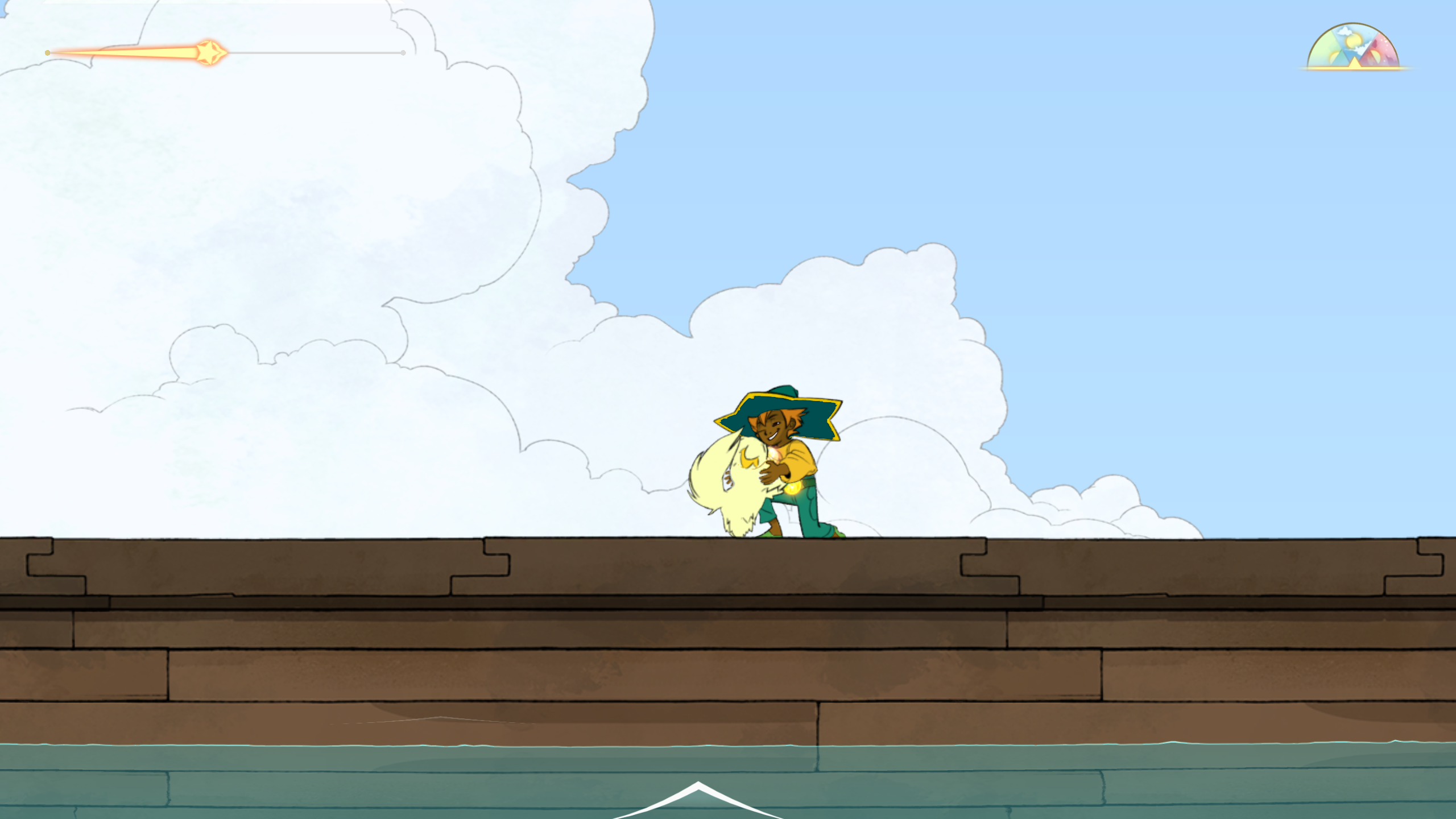
In fact, hugging is one of the game's key mechanics. As you sail the purgatory-like sea, you find lost souls and ferry them to the afterlife -- every spirit's journey showing off a unique personality, and revealing a tragic-or-otherwise life story. But what's really special about Spiritfarer is the emotional connections it builds as you talk to, run errands for, feed, and hug each spirit.
Spiritfarer makes its cast feel real and memorable through incredibly high-quality animations, writing that's chock-full of character, and a moving soundtrack, especially the heartstring-pulling swell when passing through the Everdoor. I cared about each spirit, and truly felt like I needed to help them move on.
Even the forgetful and frustrating dementia cases. I felt bad about wanting them to pass.
There's also an overarching story about the protagonist, Stella, teased by spirits that happened to know her in life. I don't think this story is told very well, though; it stays vague for most of the game, then kinda dumps out all at once. Unlike the spirits, whose incremental requests and interactions built into sincere attachment, Stella herself isn't characterized very well.
Then there's the buildings-on-your-boat gameplay. It's more farming-sim than I expected, as you use collected resources to construct gardens, and orchards, and ... looms and sawmills and metal foundries ... and, in order to house (and feed) the spirits, you'll have to continuously keep up on gardening and milling and foundry-ing et cetera.
The variety of resource-collecting microgames is neat, at first, and I admire how they set a slow and "cozy" pace while you're ferrying around. But over time, the tiered chores needed to fulfill spirit requests become a tedious grind. Planting linen seeds to harvest fibers to spin thread to sew sheets, chopping trees to collect logs to saw planks, mining ore to smelt ingots to smith plates -- toward the game's end, coziness gives way to repetitive boredom.
I kept wishing for some kind of automation infrastructure, like Factorio's or Satisfactory's machines and conveyor belts to just run these chores for me. Alas.
But the crux of Spiritfarer - its spirits - makes up for that grindiness, more often than not. The distinct personalities fleshed out by its writing and art, the stories they tell as you travel with them, build attachments strong enough to feel for these wayward souls.
Being by their side in their final moments felt... touching. Meaningful.
Better than: Animal Crossing: Wild World
Not as good as: Dave the Diver (not narratively or aesthetically, but in gameplay variety)
Presentationally comparable to: Battle Chef Brigade