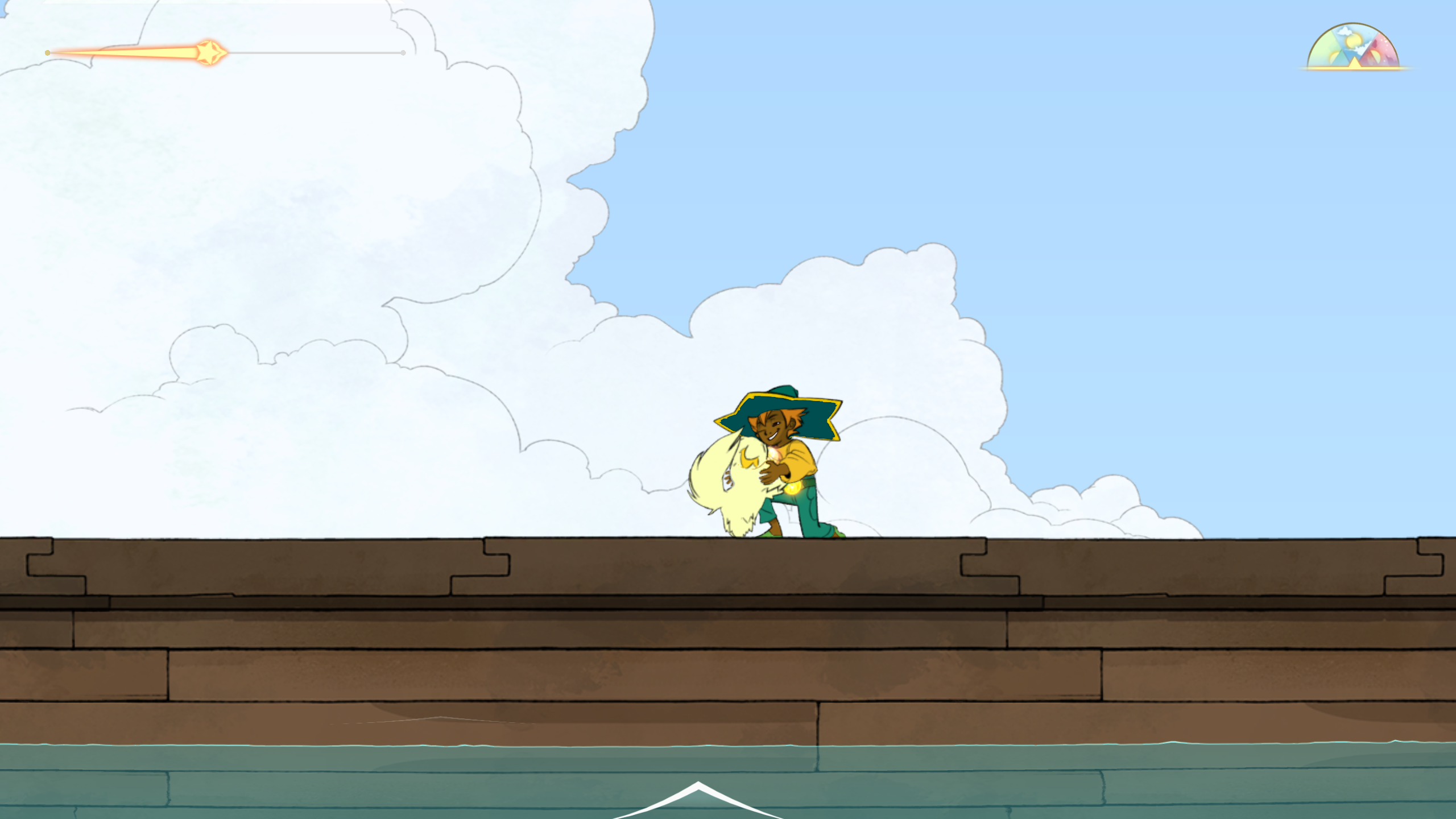
Playing A Game Hades (2020) PC

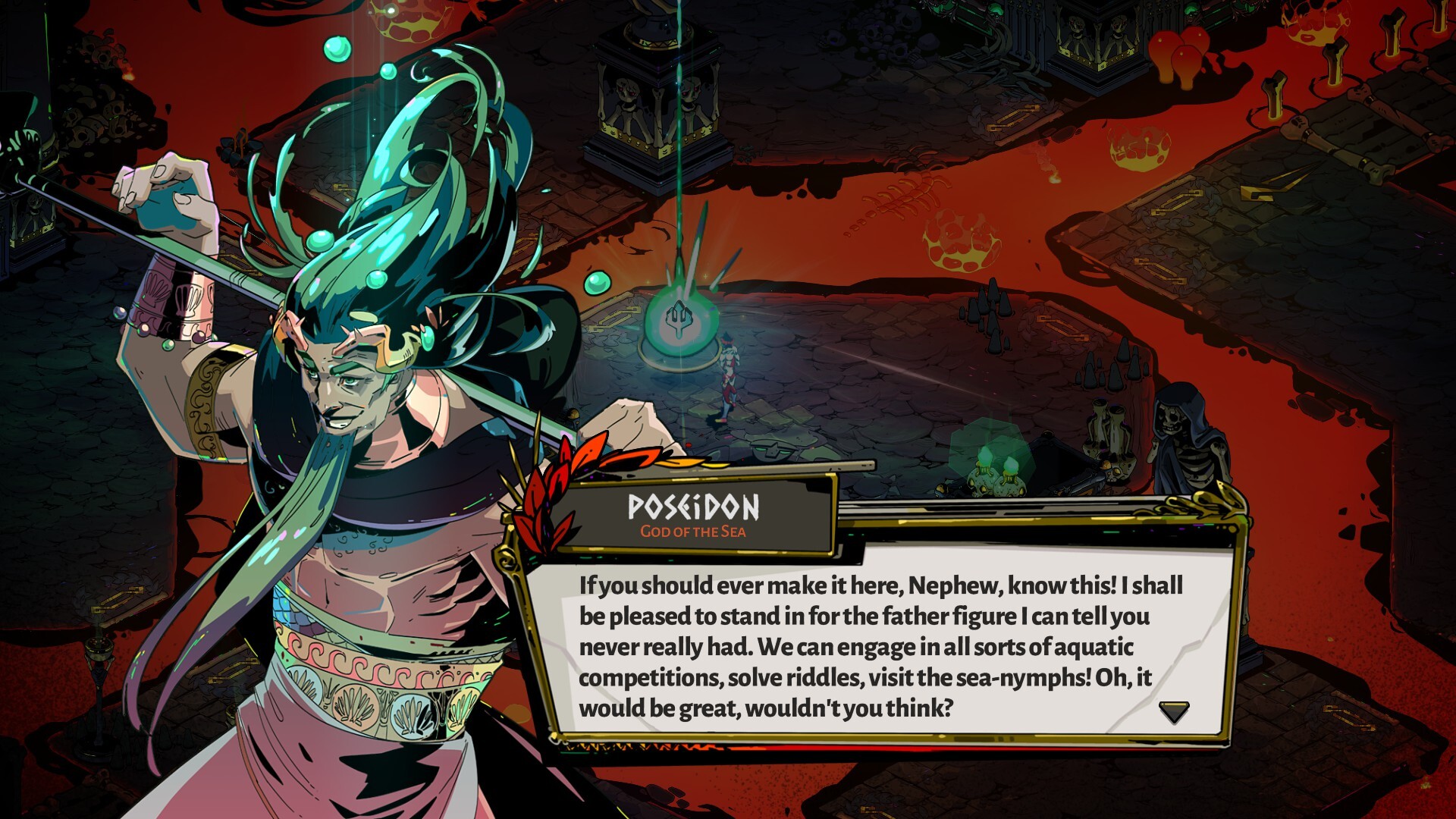
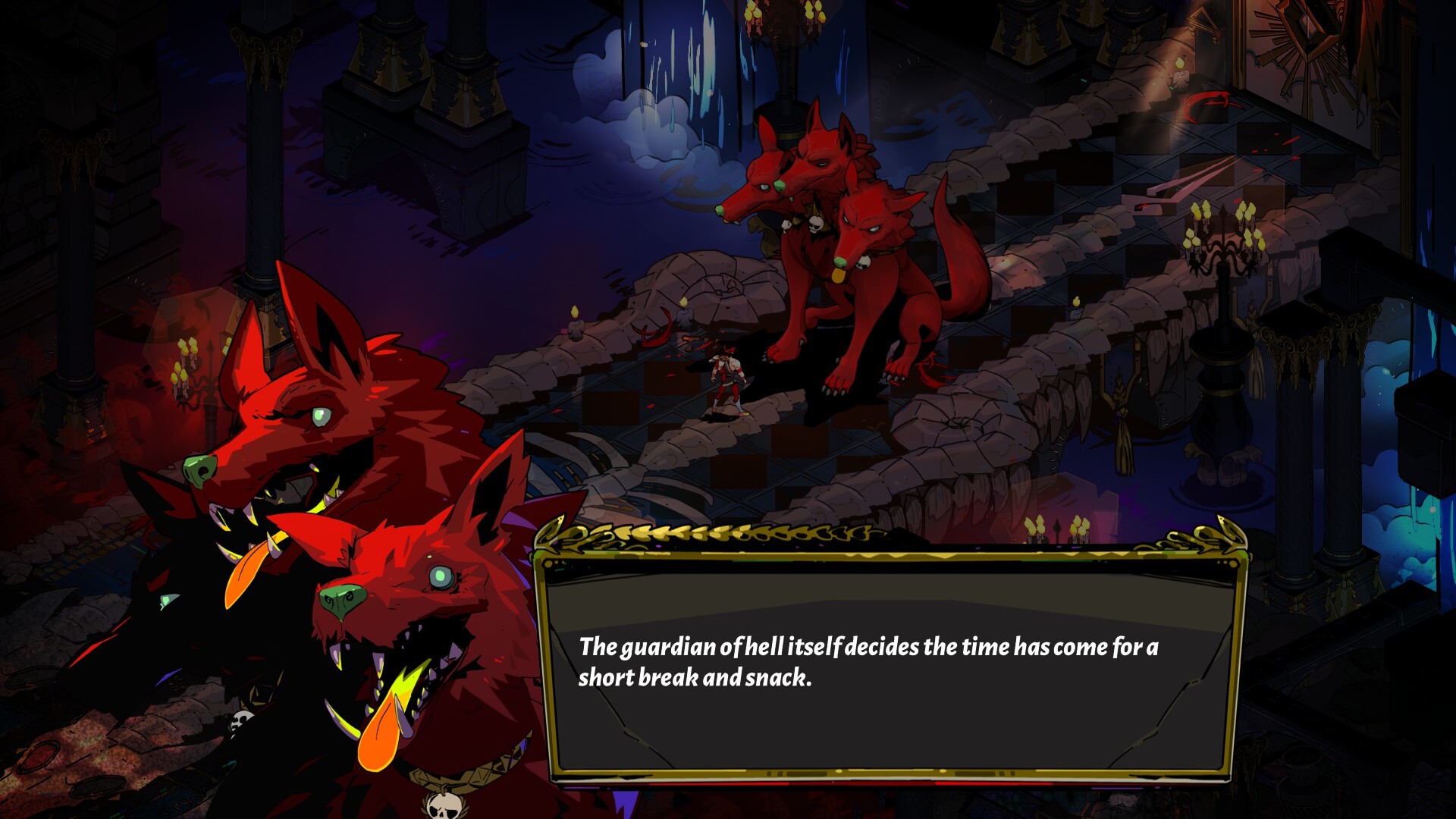
This is it! The one that worked: Hades truly feels like the culmination of lessons learned from Supergiant's previous games, combined into an experience that's compelling, exciting, and an audiovisual delight.

Like Bastion, Hades brings a variety of weapons into real-time action combat; but this time, each one really feels unique and meaningful. Like Transistor, Hades has a ludicrous amount of progression and upgrade options; but without confusing equip/upgrade modality, and with run-based resets justifying experimentation. And like Pyre, Hades deliberately separates story and action moments, building its narrative through conversational dialog inbetween fights; but now with full voice acting that seriously enhances its characters' personalities.

Unlike its predecessors, Hades had no trouble at all convincing me to repeat its "loop" -- maybe because the loop itself wasn't a surprise, as in, the fact that failing to escape Hades will respawn you ... back in Hades is coherent and clearly telegraphed. Or maybe because its fast-paced combat is legitimately fun, and stays fresh run after run thanks to randomized upgrades and encounter variety. Or! maybe because of the charming characters drawing me into its larger story, motivating me to go farther and unlock more of that story.

While Supergiant's earlier games felt like beautiful, incomplete experiments, Hades succeeds at bringing everything together: its plot and its cast, its action and its progression, all work and work well together. It's a good loop.

Key to that success is the amount - and consistently high quality - of written and voiced dialog. It continues to blow my mind that after dozens and dozens of runs, I never heard the same line twice! (Well, one time, I'm pretty sure that I got a repeat out of Lord Hades himself. Still!) This seemingly-endless supply of unique writing was critical in helping every repeating event feel new.

I can't commend Hades enough for making me like some rogue-like mechanics. I've enjoyed time-loop stories (Deathloop, Elsinore, Outer Wilds), and I've enjoyed some run-based games despite being rogue-likes (God of War Ragnarök: Valhalla, Middle-earth: Shadow of War - Desolation of Mordor) but -- Hades got me to sincerely appreciate the random encounters, upgrade combinations, and conversations I saw in each run. For the first time, I'm seriously reconsidering my c. 2014 declaration that I "hate this shit."

All that said, I do wish Hades didn't require quite so many runs to complete its story. Earning enough darkness to buy powerful upgrades took some grinding; completing enough runs to unlock the "ending" felt a bit silly; and then having to do more runs to incrementally progress character dialogs toward a "real ending" epilogue was a little annoying. The game's structural decision to restrict an NPC's dialog to one topic per run - requiring another run before they'll talk about something else - was especially frustrating when some characters acted like a bottleneck to multiple Prophecy side-quests.

(I'd also be remiss not to bring up the God Mode setting - a difficulty reduction which I absolutely needed - and how it must itself be upgraded by dying repeatedly.)

But despite wanting less-stingy story progress, I was happy to keep jumping into another run over, and over, and over again. Not just because the gorgeous art, incredible music, engaging characters, and compelling story felt worth the effort. Also because it's fun!

Better than: Deathloop, God of War Ragnarök: Valhalla, Transistor
Not as good as: well, until I play the sequel, Hades is kinda undisputed.
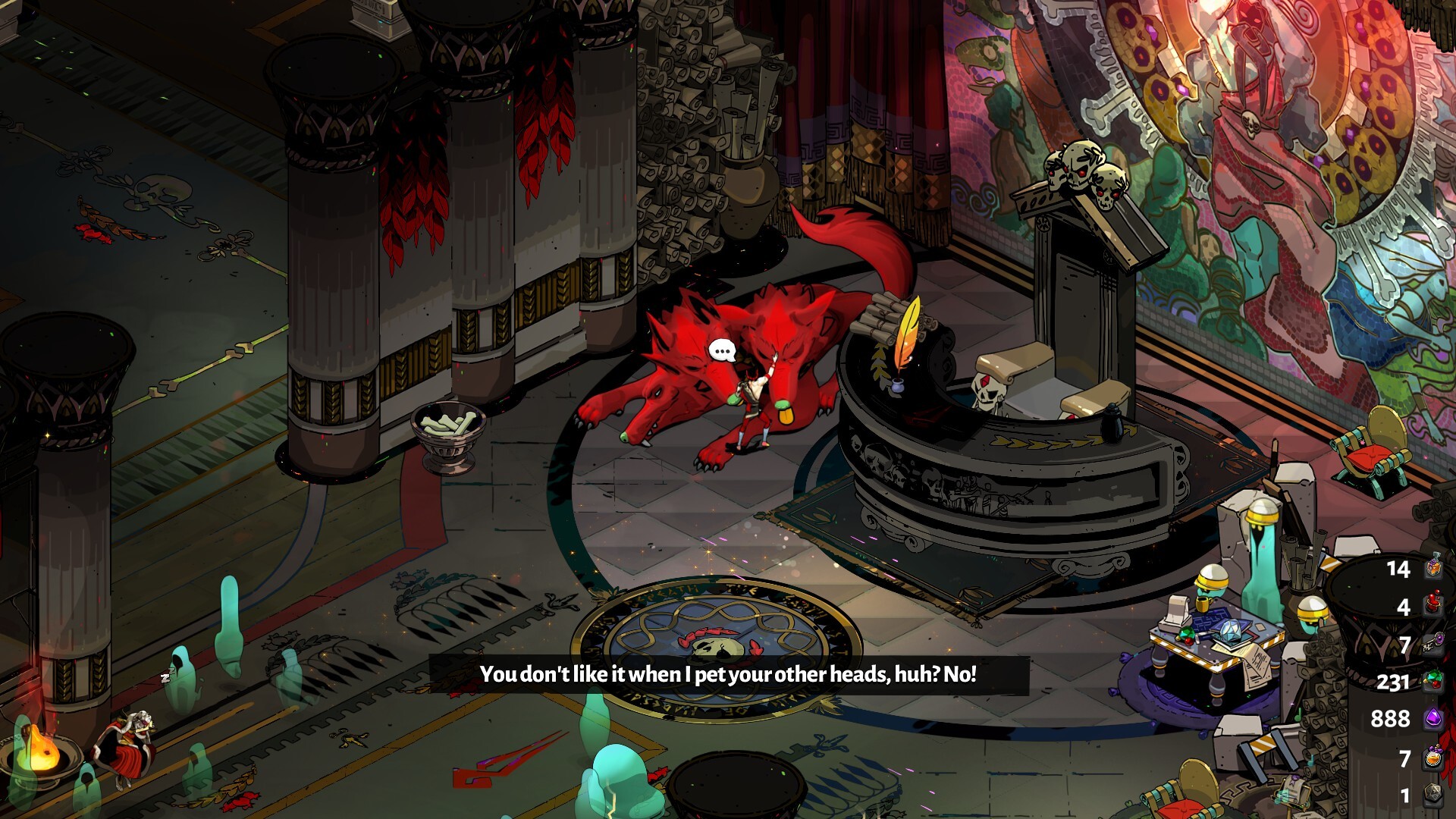
And, yes: you can pet the dog!

Rating: Awesome

I may not be into League of Legends, but I was into the worldbuilding in Arcane -- and so a Metroidvania set in that world, with Sands of Time-style rewinds!, seemed right up my alley. Convergence: A League of Legends Story didn't ... go down that alley, though.

For one thing, Convergence doesn't line up much with Arcane's story threads or key settings, nor does it "build" a coherent world of its own. Its opening chapter is overflowing with casual references to people and places and concepts that I don't know or care about; I can only guess that the references will mean something to a League diehard, but as an outsider I didn't get anything out of all the lore-babble.

I did get something out of Convergence's parkour-ey traversal, which (at least in the early game) includes a pleasant variety of Prince of Persia-esque acrobatics, pole-jumping and wall-running and et cetera. Although I don't know if more gameplay hours might change that opinion, since I've read that there's no fast-travel.

But what really put me off Convergence was the combat, which simply has too many enemies. Even when turning the Battle Compositions difficulty down to "Light" - and, I do have to give the game kudos for discrete difficulty settings - the amount of fodder thugs and annoying fliers that keep showing up just feels like a chore.

Enemy volume also works frustratingly against Ekko's battle tactics, as dodge- and parry-able tells become impossible to see when two guys are visually overlapping, and then rewinding to undo one of their attacks will frequently result in another enemy hitting you anyway.

I gave up on Convergence fairly early, but with the distinct impression that it was made for LoL devotees who don't mind repetitive combat, and for whom Metroidvania and PoP influences could be neat surprises. As a fan of those latter ideas, but not the former, this game doesn't seem like it's for me.

Rating: Meh
Playing A Game Viewfinder PC

Please don't misunderstand when I say: Viewfinder is more than a tech demo, but not much more.

Its perspective-twisting mechanics are impressive, making for some pretty neat puzzles! And a few levels add compelling twists, like electric circuits (which must stay complete in snapshots) and abstract art-style switch-ups (which affect level geometry!). But the vast majority of its puzzles are shallow. Viewfinder never builds the complexity to compare to, say, Antichamber.

It has a storyline, framing and explaining its physically-impossible world, as well as audio recordings from a cast of background characters. But the narrative isn't convincingly connected to what you're doing in-game; it feels very bolted-on. And those characters aren't ... interesting. Viewfinder doesn't have the personality or the drama of a Portal, or even a Magrunner: Dark Pulse.

And outside of the puzzles, the game isn't all that well-polished. Voiceovers play over one another. Music is moody, but dull and repetitive. Menus look like they were slapped together last-minute.

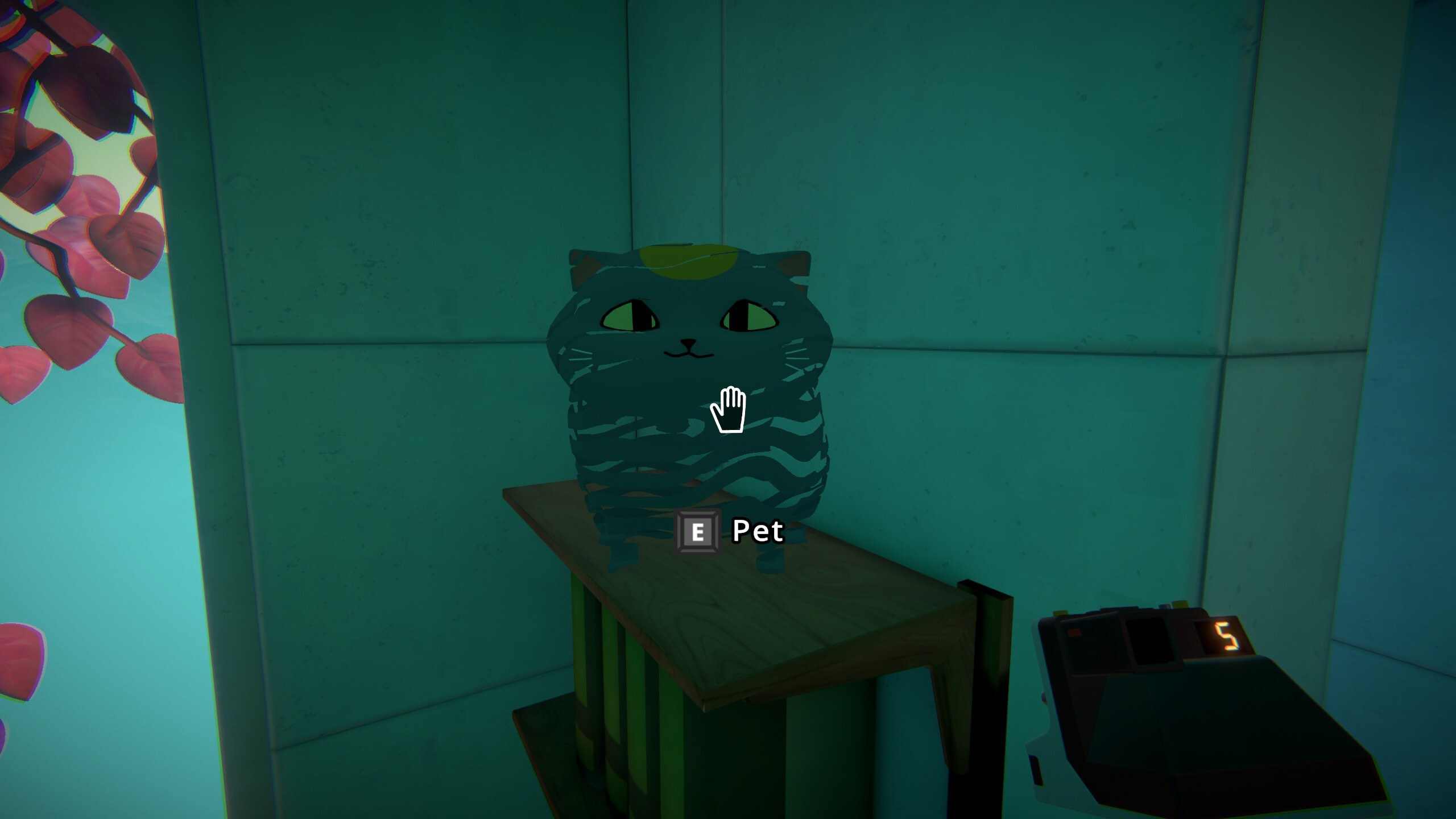
You can pet a cat, though.

Viewfinder has some pretty awesome technology powering its core mechanics, and a basically functional game surrounding them. There are plenty of worse first-person puzzlers. There are plenty of better ones, too.

Better than: Qbeh-1: The Atlas Cube
Not as good as: Q.U.B.E.
Comparable to: Quantum Conundrum

Rating: Meh

Blast Corps is a truly fond memory for me: using creative and wacky vehicles, like a side-swiping dump truck and a giant one-armed mecha, to demolish buildings in the name of safety. Sadly, 1997-era Rare quickly moved on to new business (GoldenEye 007, Banjo-Kazooie, et al) and never looked back; after three decades of no sequels or remasters or reboots, I thought I might be the only one who remembers Blast Corps. But it turns out I'm not alone after all.

Instruments of Destruction succeeds brilliantly at fulfilling my nostalgia for Rare's N64 explosion-fest. Given a flimsy premise of knocking down unsafe structures, you pilot scores of wacky, experimental demolition vehicles through a series of destruction, racing, and move-boxes-to-places missions. And when I say "wacky" and "experimental" I mean...

  • The Hiker: a tractor with a flipping platform, like a dang battlebot!
  • The Puck: a helicopter that magnetically drops, then retrieves, a super-heavy wrecking puck!
  • Goliath Grappler: a tank that shoots and retracts a giant harpoon!
  • SuperRoller: a rolling sphere which magnetically collects debris! (yes, it's Katamari Damacy)

... are just a few of this game's wild and crazy Instruments. Nearly every mission, including "challenge" variants, introduces a new weapon-laden truck or cannon-turreted tank or laser-spitting helicopter or et cetera.

Some vehicles are difficult to control - particularly a handful of hovering craft whose radial symmetry obscures which direction is "forward" - but the game's immense arsenal means that there's always something new and inventive just around the corner. (Plus, awkwardly stumbling into stuff by accident is still pretty fun.)

And that's key to how Instruments of Destruction doesn't simply re-iterate Blast Corps, whose scope is relatively quaint by today's standards. Instruments re-envisions Rare's idea, and recaptures the feeling of its arcade-ey sandbox-ey demolition at a larger, modern scale.

The soundtrack is fucking rad, too.

What more could you ask for? Well, maybe a few quality-of-life improvements, like an easier way to navigate the level-select menu/map; and a mission radar to help find objectives, which are hard to see in some levels' terrain.

I guess I "could" ask for a cohesive open world inbetween the game's missions, and a compelling narrative told by interactive NPCs. A more-engaging world might've motivated me to check off more optional-challenge boxes, and dive deeper into its "Build & Destroy" vehicle-construction mode. That's really not something I'd expect from a solo developer, though. (Even one whose resume includes Red Faction: Guerrilla.)

As an explosive destruction sandbox with arcade challenges, and as a modern love letter to Blast Corps, Instruments of Destruction is more than good enough.

Better than: attempting to replay Blast Corps, for sure.
Not as good as: "a cohesive open world" with destruction, e.g. Red Faction: Guerrilla or The Saboteur
Pro-tip: turn off controller rumble, unless you want full-strength non-stop force feedback.

Rating: Good

There are lots of different approaches to Early Access. Some games enter it really early, like a tech demo or engine proof, while some other games enter it nearly-complete but for compatibility bugs. Deep Rock Galactic: Rogue Core may look almost finished, but in truth it's still got a long way to go; and the developers know it, especially following early feedback.

In an ebonut-shell, Rogue Core's design goal is to take the progression- and resource-based upgrade paths from DRG Classic and replace them with temporary, randomized (roguelike) equipment each run. ... but also to have permanent upgrades earned through post-run (roguelite) progression. And, impressively, Rogue Core strikes a good balance between those two ideas: weapon options in each run feel fresh and exciting, while I'm also continuously earning and customizing loadout power-ups.

Several options in both of those paths feel lacking, currently. There are a bunch of loadout upgrades that don't "upgrade" very much, like unlocking them is a waste, and some randomized weapons don't carry enough ammo to last through real combat. I'm hoping the game's iterations in Early Access will improve these options.

But my biggest gripe with Rogue Core isn't its progression mechanics, especially since a failed run is still pretty rewarding. It's how a run fails that feels unreasonably punishing.

Run timeouts are really frustrating, for a couple reasons: the on-screen timer itself isn't obvious, so it's easy to forget that the clock is always ticking; and when time does run out, the immediate consequence is a swarm of monsters just like a mid-mission swarm (or like swarms in DRG). A swarm which the game has trained you to shoot and smash your way through -- except in the timeout case, this isn't possible! The swarm never ends.

It's a jarring, kind-of sadistic twist on gameplay assumptions you've built pre-timeout. I think this mechanic really needs to change into something that's more clearly different from "normal" swarms, and - if Rogue Core wants the timeout to force you toward hurrying along, or giving up - something that can end the mission more quickly, rather than wasting your time with a hopeless battle.

"Death spirals" are also more likely in Rogue Core than in vanilla Deep Rock, due to two particular gameplay changes:

  • Where miner-dwarves had a recharging shield bar, reclaimer-dwarves have a non-recharging armor bar. If you die, then get resurrected, there's no shield buffer; at low health and with no armor, you'll probably die again soon.

  • In mining missions, ammo resupplies could be timed (and placed) at will, through the mine-able supply of Nitra. But in reclamations, resupplies are in static and limited positions on the map; if you're low on ammo, and if there are enemies inbetween you and a resupply, fighting your way to it might leave you in an even worse spot.

I'd really like something to change on both of those fronts, so that resurrection feels less fragile, and ammo supply is less perilous.

Then there's the boss fight, at the end of a run. A friend and I - both extremely experienced in Deep Rock - managed to beat it, but only by the skin of our teeth (and with no ammo to spare). Its combination of huge health, tricky weak-point-management, and intense area-of-effect attacks was absurdly tough for our low-level reclaimer dwarves.

Hard bosses aren't necessarily a bad thing, but this being the first boss is just demotivating. I'm hoping that a slightly tamer boss will get implemented and take its place in the game's early missions.

Despite all the ranting above, there are parts of - and ideas in - Rogue Core that I do really like. The general feel of combat is really fun, the optional mid-mission activities (for bonus Expenite) are cool, and I'm excited to see new randomly-modified weapons in future runs.

In the game's present form, there's more pain and suffering than I'd like inbetween its fun parts. But they're still working on it!

When Spiritfarer first showed up back in 2019, my interest was piqued by "exploring, building, [and] cat". Now, finally playing it - with post-release updates in a "Farewell Edition" - the exploring and building didn't turn out quite like I expected. But what I got instead was mostly good.

As for the cat, Daffodil, he's fluffy and squeaky and playful and you can hug him. So adorable.

In fact, hugging is one of the game's key mechanics. As you sail the purgatory-like sea, you find lost souls and ferry them to the afterlife -- every spirit's journey showing off a unique personality, and revealing a tragic-or-otherwise life story. But what's really special about Spiritfarer is the emotional connections it builds as you talk to, run errands for, feed, and hug each spirit.

Spiritfarer makes its cast feel real and memorable through incredibly high-quality animations, writing that's chock-full of character, and a moving soundtrack, especially the heartstring-pulling swell when passing through the Everdoor. I cared about each spirit, and truly felt like I needed to help them move on.

Even the forgetful and frustrating dementia cases. I felt bad about wanting them to pass.

There's also an overarching story about the protagonist, Stella, teased by spirits that happened to know her in life. I don't think this story is told very well, though; it stays vague for most of the game, then kinda dumps out all at once. Unlike the spirits, whose incremental requests and interactions built into sincere attachment, Stella herself isn't characterized very well.

Then there's the buildings-on-your-boat gameplay. It's more farming-sim than I expected, as you use collected resources to construct gardens, and orchards, and ... looms and sawmills and metal foundries ... and, in order to house (and feed) the spirits, you'll have to continuously keep up on gardening and milling and foundry-ing et cetera.

The variety of resource-collecting microgames is neat, at first, and I admire how they set a slow and "cozy" pace while you're ferrying around. But over time, the tiered chores needed to fulfill spirit requests become a tedious grind. Planting linen seeds to harvest fibers to spin thread to sew sheets, chopping trees to collect logs to saw planks, mining ore to smelt ingots to smith plates -- toward the game's end, coziness gives way to repetitive boredom.

I kept wishing for some kind of automation infrastructure, like Factorio's or Satisfactory's machines and conveyor belts to just run these chores for me. Alas.

But the crux of Spiritfarer - its spirits - makes up for that grindiness, more often than not. The distinct personalities fleshed out by its writing and art, the stories they tell as you travel with them, build attachments strong enough to feel for these wayward souls.

Being by their side in their final moments felt... touching. Meaningful.

Better than: Animal Crossing: Wild World
Not as good as: Dave the Diver (not narratively or aesthetically, but in gameplay variety)
Presentationally comparable to: Battle Chef Brigade

Rating: Good
Playing A Game Pyre PC

I'm on record - back in 2022 - calling Transistor "like ... a proof-of-concept for Hades". I can't help but describe Pyre in the same way: another step in Supergiant's journey to a land-of-the-dead roguelike, but not much of a destination on its own.

It starts, as ever, with great-looking art and great-sounding music which set a wildly imaginative scene; but like Transistor and Bastion before it, the novelty of Pyre's aesthetics fades quickly. In dialog scenes and in its highly stylized overworld "map," as characters describe their flat personalities in terse lines, and as flavor text dumps buzzword-filled irrelvant lore babble, Pyre comes off as a shallow visual novel. The surface-level style has very little narrative substance beneath it.

I have to particularly critique the game's dialog-keyword-hover-detail mechanic, which tantalizingly highlights words in a dialog box that you can hover over for more background text, background which is never meaningful.

As for the gameplay inbetween those story scenes, to its credit, Pyre experiments more boldly than its predecessors -- its "rites" resemble basketball more than typical videogame combat. And, though the full set of controls is bewilderingly complex at first, it's easy enough for a beginner to run around and learn the mechanics one step at a time.

Unfortunately Pyre's rites don't evolve much strategically, as the simplest tactics of "run fast to the goal" and "attack until the field is clear" remain the best regardless of what's happening with your opponents or the playfield. (At least in my apparently-limited experience; I'll come back to that.) Since you're only able to move one of your three characters at a time - the other two will just sit and wait for an enemy to attack them - bigger plays involving teammate positions and timed passes aren't practically feasible.

Lacking motivations (or opportunities) to try different techniques, the experimental gameplay ultimately doesn't feel like a success. And as both the rites and the storytelling become fairly tedious, I wasn't compelled to keep playing past Pyre's surprise-not-ending.

The "surprise" is that, although Pyre sets up a clear sequence of events with a specific end-point - and its between-rite progression choices seem like a foundation for multiple "runs" through that sequence - a late narrative twist reveals that the final rite doesn't complete OR reset the campaign. Instead of freeing you and the party from your exile in Pyre's world, one party member is freed, and the "real" campaign becomes the completion of yet more rites! to free more characters, one at a time.

It vividly reminds me of Final Fantasy IV's narrative bait-and-switch around collecting the all-powerful magic crystals, then discovering there are more crystals, then still more crystals after that. A frustrating memory that I'm now recalling Bastion had dug up, too.

So yeah, I stopped playing Pyre after the "final" rite turned out to be a fraction of the way through its story. I may not have seen everything in Pyre, but I feel like I saw enough to imagine the rest, and I just wasn't interested enough to keep going.

Better than: Bastion
Not as good as: Transistor
Again, as a story which requires loop-like repetition toward an out-of-loop story: I keep thinking that Hades is the game they'd wanted to make all along.

Progress: Liberated one exile.

Rating: Meh

My other justification for a Switch 2 - other than punching dirt for big bananas - was to finally play The Legend of Zelda: Tears of the Kingdom with a stable framerate. I know that may sound absurd, shelling out new-console money to replay a game... but.

I really like Tears of the Kingdom.

Enough to sink dozens hundreds! of hours into its Switch 2 enhanced port over the past few months. And this time I did way more than awaken ancient sages and build up a Ganon-stomping arsenal: I went full-on obsessive completionist.

This time I checked off all the side-quests, all Misko's hidden treasure, all the Hyrule Compendium photos, all the Monster Medals (which I didn't know existed!), all the Bubbul Gems, all the Korok Seeds. A thousand of those little fuckers.

Not because the collectible micro-puzzles were particularly fun, and certainly not for the in-game reward.

I just really like Tears of the Kingdom.

The Zelda Notes companion app was a pretty huge help, particularly its map's "Hide Discovered Destinations" i.e. show-what-I'm-missing toggle. It's a bit of a shame that TotK's Switch 2 update apparently wasn't able to add this in-game - and kinda weird to be using a companion device in parallel with Link's own in-game tablet, while the Switch 2 itself is busy ... running the game - but I digress. The app is definitely a boon for completionism.

(The voice memos, uh, "Memories?" unlocked by the app are disappointingly bland, and seem more like a technical proof-of-concept than a meaningful feature. Of course I still collected them all, for the sake of 100% completion.)

Anyway- even on my fourth journey through this Breath of the Wild-based representation of Hyrule, I still found plenty of satisfaction from exploring it, scouring it, and conquering it. Shit, I'm still engaged enough to be curious about the Hyrule Warriors sequels, Age of Calamity and Age of Imprisonment.

Though I do hope that Link's next big adventure comes with a fresher overworld map. And maybe more house stuff.

Rating: Awesome

Clair Obscur: Expedition 33's makers were clearly fans of Final Fantasy's PS1 era: there was a certain narrative-aesthetic "feel" common to Final Fantasy VII, Final Fantasy VIII, and Final Fantasy IX (not to mention Final Fantasy X) which Clair Obscur studiously, thoroughly replicates.

Its world is wildly fantastical, made of numerous environments each full to bursting with imaginative designs and vivid color. The party shares moments of sorrow and celebration, intrigue and melancholy, as they journey through this wondrous world and explore its metaphysical mysteries ... on their mission to kill a god. There are even some all-but-explicit homages, like occasional fixed-camera exploration screens that evoke the pre-rendered backgrounds from Square's PS1 games.

Clair Obscur also replicates aspects of those older JRPGs that seem, well, old. As pretty as the environments are, they're often frustrating to navigate, and have no in-game map; the overworld teases plenty of optional content, but a majority of it isn't accessible until the game's final act, due to level gates and/or missing traversal abilities.

Character upgrades and customization are bewilderingly complicated. Between the five stats you can increment at level-up, skill trees with level-up unlocks, collectable equipment with varying stats and ability bonuses, equipment upgrades (swords have levels!), equippable accessories that consume upgradeable points (and the accessories also have levels!) ... most RPGs would choose two or three of these mechanics, but Clair Obscur implements all of them.

There are so many options and possible combinations, with intricate combat impacts - oh yeah, each character's combat tactics are completely unique!, reminiscent of Final Fantasy VI - and many upgrade choices turn out to be worthless, or even objectively harmful. The staggering complexity discourages experimentation; once you find a configuration that "works," screwing with it doesn't feel worth the effort.

And unfortunately, this leads to the combat itself becoming intensely repetitive, especially as battles get more frequent in the game's 2nd and 3rd acts. Both from overlong dungeons with the same enemies copied-and-pasted over and over again, and from gaps inbetween level expectations -- but like I mentioned earlier, "a majority of [optional content] isn't accessible until the game's final act", so keeping your levels up with the story more-or-less requires some grinding.

I really wish that Clair Obscur's parry and dodge and attack-timing interactions could make that combat more interesting, but these mechanics are confounding in their unpredictability. Enemy "tells" aren't very clear or consistent, enemy attacks include way too many hits, and the timing requirements are incredibly narrow. Much like I once wrote about Mario & Luigi: Bowser's Inside Story:

Learning an enemy's patterns can be a crapshoot. Some enemies have a large number of attack patterns, and what looks like Pattern 5 may end up being a surprise! Pattern 6, whose defense is totally different.

In many cases, the timing window for a successful defense (or attack) is astonishingly small. They're just really hard to do.

I'll confess that I played through the whole game in "Story" difficulty, because otherwise I wouldn't have survived occasionally missing a defensive reaction.

All this may sound like I'm down on Clair Obscur's gameplay, and, well... I am. As the first act's tight narrative pacing begins to loosen up, an increased focus on combat exposes the tedium of its over-complex character sheets and over-difficult timed inputs. By Act 3, I was really ready for the game to be over.

Clair Obscur succeeds as art, aesthetically, thanks to outstanding visuals and especially thanks to a moving and memorable soundtrack.

As an interactive experience, it's weighed down by archaic game designs that don't respect the modern player's time. But if you're as enamored by late-90s-early-00s Final Fantasy as this game's creators evidently were, maybe you'll enjoy the time-sinks of grinding levels and customizing your characters; maybe that's just what you've been looking for.

Better than: Mario & Luigi: Bowser's Inside Story
Not as good as: South Park: The Stick of Truth
I didn't know where else to mention: the lip sync is wack. The voice performances are pretty great, though.

Rating: Good
Playing A Game Animal Well PC

Animal Well is a game of secrets. And precision platforming.

On the surface, Animal Well is a rare entry in the - for lack of better term - puzzle-vania subgenre, like a Metroid or a 'vania whose interconnected world map is populated with puzzles instead of enemies. (Well, there are some enemies, too. I'll get to that.)

It uses a sense of intrigue, of abstract mystery, as its "hook" -- like Toki Tori 2+ (or Hollow Knight), the game opens with minimal guidance and no explicit instruction. The dark, dank art style and creepy ambient audio fill you with foreboding loneliness, while the map entices you with out-of-reach ledges and arcane mechanisms. Animal Well doesn't just ask you to figure out how to solve its platforming puzzles, it asks you to figure out what the puzzles are.

Personally I think it leans a little too hard into the obscurity angle; especially early on, when I was still finding its basic equipment - and discovering what that equipment could do - I flailed around in several puzzle rooms without realizing I didn't have the required item. Consulting online guides certainly dulled some of the game's appealing mystery, but felt necessary for me to get un-stuck.

I also struggled with Animal Well's intense, sometimes Super Meat Boy-ish demand for precision -- and extremely unforgiving checkpoints. Missing a jump, or mis-timing a button press, or failing to outrun a fucking ghost dog monster would far too often force me to re-tread and re-solve an annoying number of screens.

To be clear, I did really enjoy my time in Animal Well; exploring its world and experiencing its vibe was satisfying overall. But I know there are many more mysteries hiding in here yet, and I also know that I don't have the patience to see them.

Better than: Pocket Kingdom
Not as good as: Iconoclasts
I really don't think it would've hurt: to have more generous save points and quicker retries. Just look at VVVVVV!

Progress: beat the "manticore" (?), collected 27 eggs.

Rating: Good